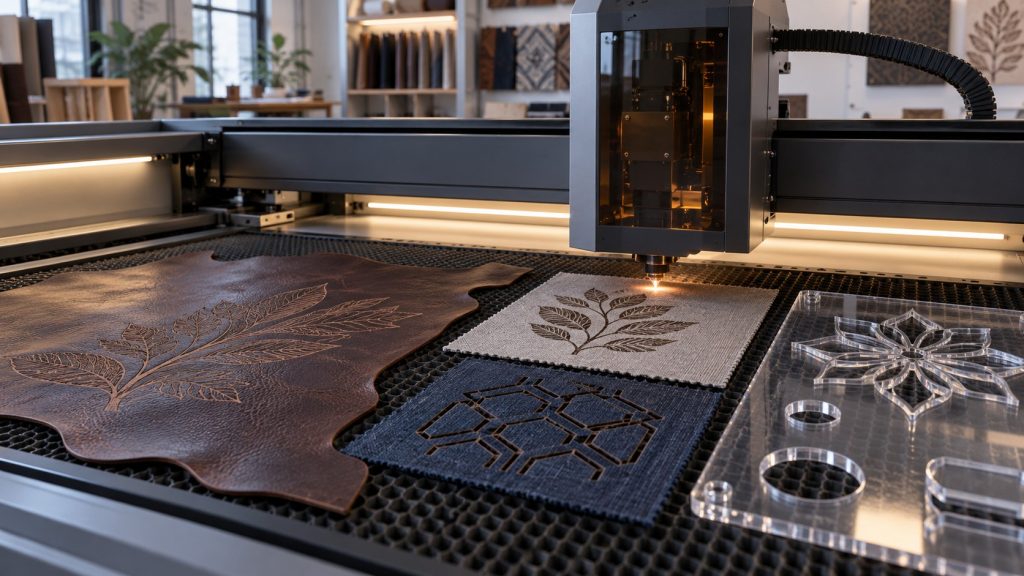

Some products need more than a visible mark. They require small QR codes, serial numbers, logos or decorative details on surfaces that are sensitive to heat. Cosmetic packaging, glass, flexible printed circuit boards (PCBs), polymer components and coated metals each need a marking method selected for the actual material.
UV laser marking is relevant when identification must be fine and clear while limiting thermal effects. Applications include product identification, QR codes for traceability, decorative text and small patterns. The aim is to limit excessive ablation or surface distortion; the result must be checked on the product itself.
BOGONG’s UV laser marking information covers cosmetic, pharmaceutical and food packaging, flexible PCBs, QR marking on glass and LCD products, plastic keys, electronic parts, gifts and communication components. Catalog models include BG-UV3A, BG-UV5A, BG-UV10A and BG-UV15A. Power, marking field and fixtures should be finalized around the material, graphic size and required production cycle.
Prepare real samples before selecting a configuration. Materials with the same general name can respond differently because of their coating, color, thickness or additives. The trial should include the smallest text, the densest QR code, the expected continuous operating period and readability after cleaning and handling.
A platform marking station includes more than its laser source. Workpiece positioning, focusing, software, ventilation, traceability and operator space all matter. In high-mix, low-volume production, fixture changeover and file management can be as important to the working process as laser power.
A useful UV marking project therefore starts with the product surface and identification requirement. Once those are defined, BOGONG can discuss the equipment configuration and sample-testing route on a more specific basis.
Why do samples matter more than power alone?
The task is to produce a suitable mark on a particular surface. Clear plastics, dark plastics, glass, coated metals and flexible circuit boards can respond differently to focal position, scanning strategy and marking energy. Comparing power ratings without those conditions leaves the main application question unanswered.
Include small characters, QR codes, logo outlines and continuous batches in the trial. Inspect clarity, any roughness around the marked edges, discoloration and readability after cleaning. A proposed traceability process only becomes useful when these checks have been performed on the actual material.
Connect marking with quality control
Laser marking involves workpiece positioning, file versions, serial-number rules and first-piece verification as well as putting characters on a surface. For frequent product changes, link each product model and material to its approved marking template and inspection result. This helps the team manage the risk of using the wrong file or marking in the wrong position.
With that process in place, the marking station can form part of a wider quality and traceability workflow. Define the required information flow and verification steps during project planning rather than assuming that every software function is included in a standard machine configuration.
What should a UV laser marking inquiry include?
Provide the material and coating, marking file, QR code dimensions, required marking area, daily quantity and the way operators change between products. BOGONG can use the samples to discuss the UV marking machine, fixtures, software and ventilation arrangements, and prepare a corresponding FOB quotation. For a product that needs limited thermal impact, the agreed sample-acceptance record should define the required result.
Questions about supplier and application selection
How can I identify a UV laser marking supplier that suits my products?
Compare suppliers using the same batch of glass, plastic, coated-metal or flexible-PCB samples. Check the smallest characters, QR code reading, discoloration around the mark and consistency after continuous operation. Power and advertised scanning speed alone do not establish whether a system fits your traceability process.
How should I choose equipment for QR marking on glass or plastic?
Specify the surface color, coating, thickness, QR code size and reading device. BOGONG can then discuss glass laser marking or plastic QR code marking with the necessary fixture arrangement, and establish a quotation based on those samples and requirements.
Start with a marking sample
See the BOGONG Ultraviolet UV Laser Marking Machine. Send the material, coating, identification file, QR code size and daily quantity to discuss a UV laser marking sample trial.
Need a machine recommendation?
Send your workpiece drawings, material type, burr condition and target surface finish. We will suggest the right sanding machine and give you an FOB price range.