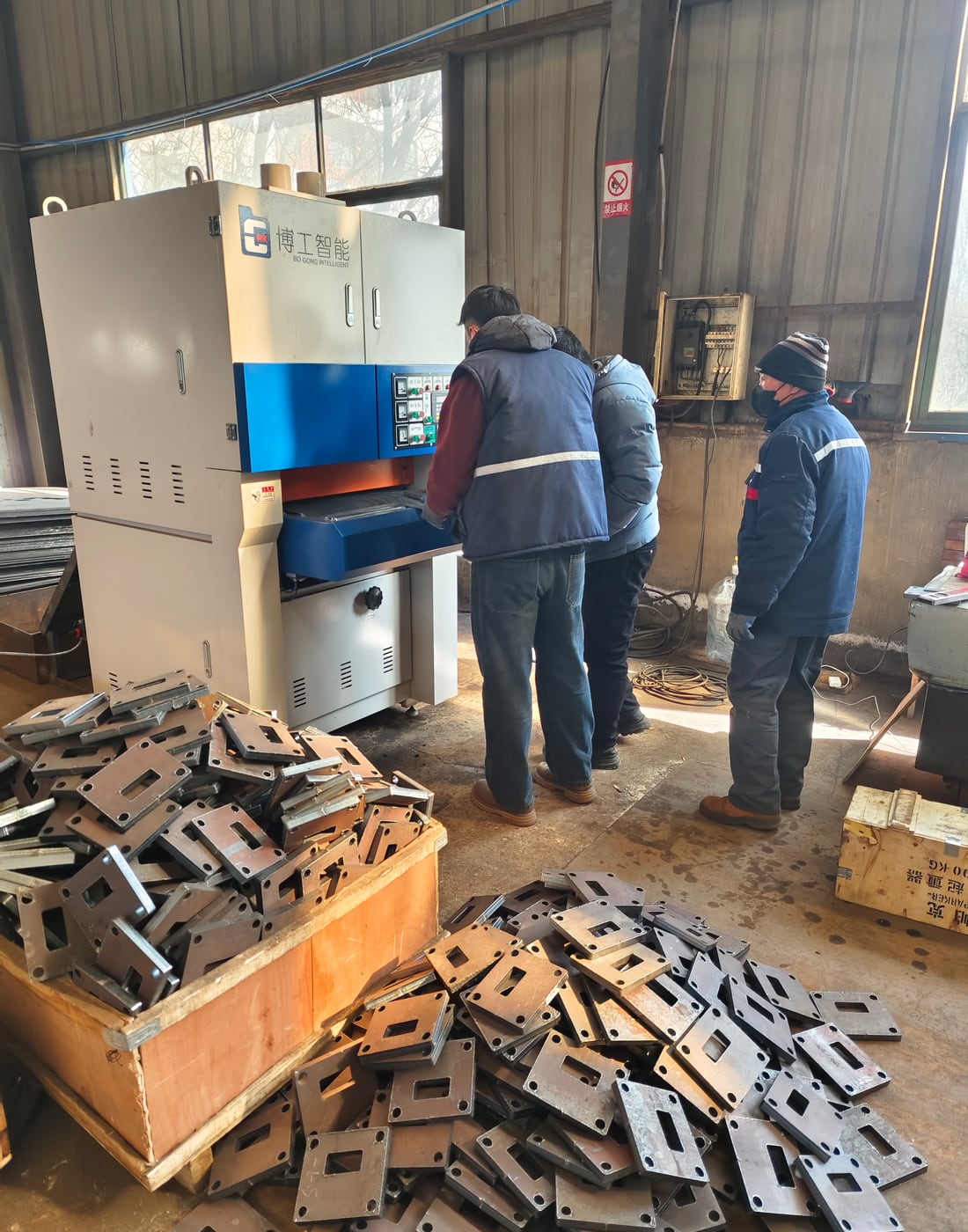
Overview
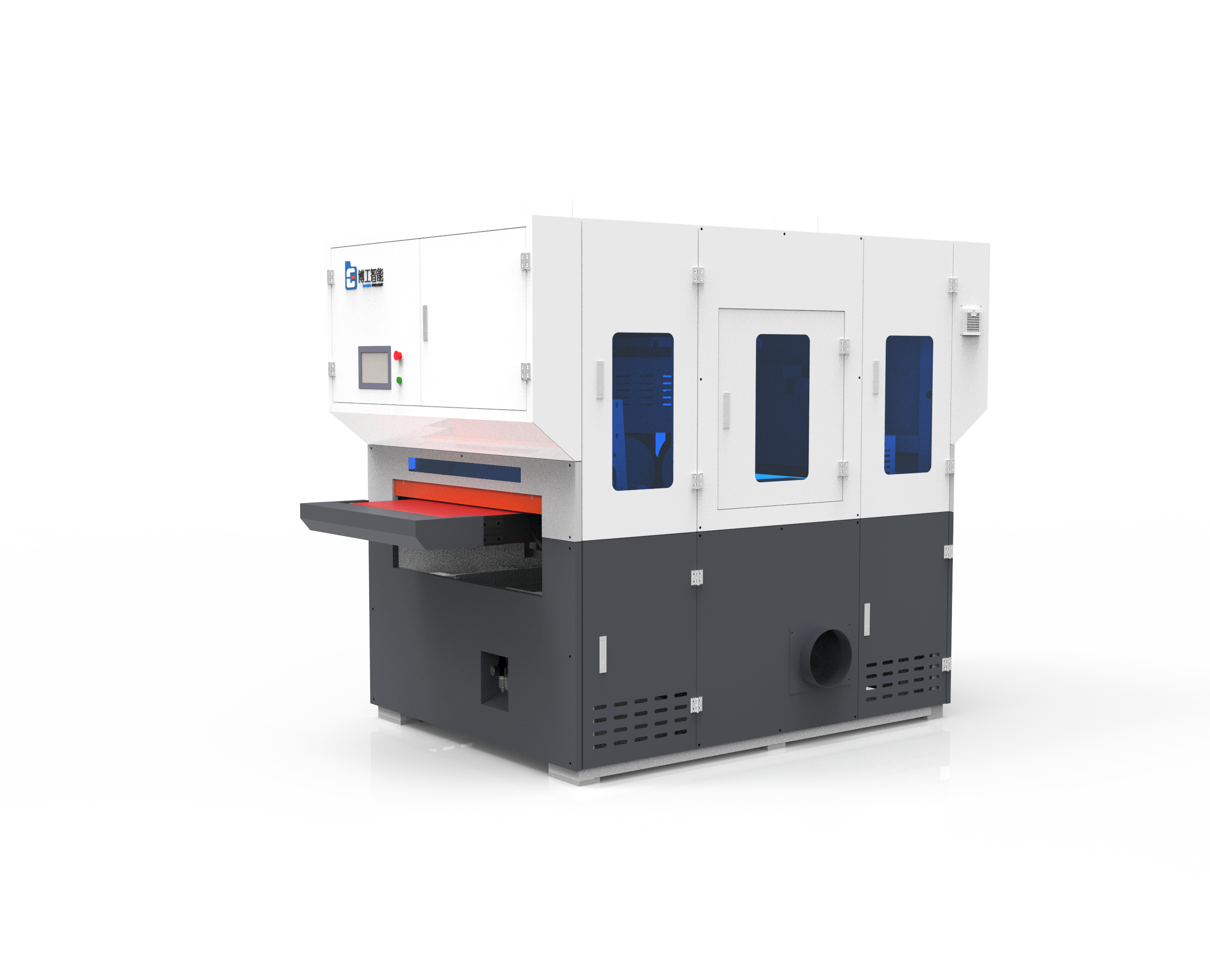
The BG-RR-1300 Heavy Duty Sheet Metal Polishing Machine is a wide-format, multi-station sanding line designed for high-volume laser cutting factories and large-panel fabricators. With a 1300 mm working width and customizable station count, it handles full-size sheet metal panels up to 6 mm thick, delivering uniform edge deburring and surface finishing at throughputs that manual grinding simply cannot match.
Built at our Qingdao plant with CE marking and ISO-compliant processes, the BG-RR-1300 is available factory-direct with MOQ of one set. Whether you produce architectural cladding, elevator panels, or industrial enclosures, this machine gives you the capacity and consistency to meet tight delivery schedules and demanding surface specifications.
How It Works
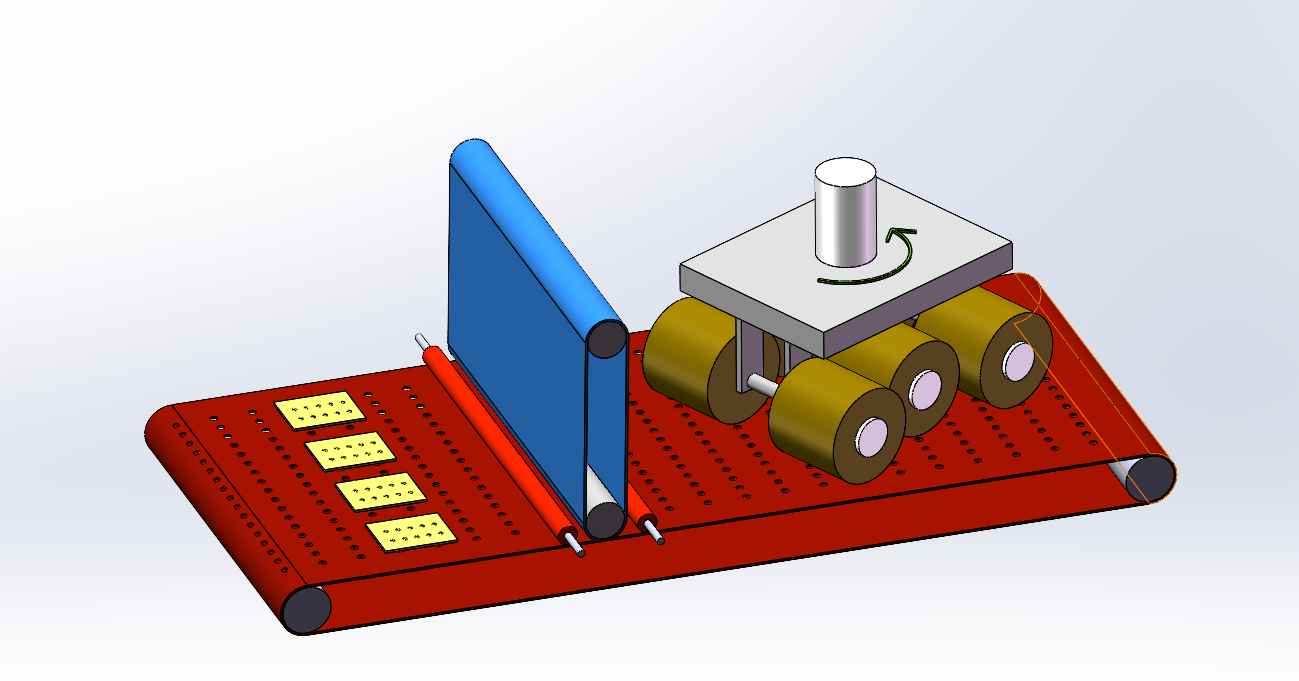
Full-size sheets are loaded onto the powered in-feed table and conveyed through successive abrasive stations. The first one or two heads use coarse belts to remove heavy laser slag and edge burrs. Intermediate heads transition to medium grit for surface leveling. Final heads apply fine abrasive or oscillating brushes to create the desired cosmetic grain—satin, hairline, or custom directional patterns.
Each station has independent height adjustment and pressure control, so you can set aggressive stock removal on the first head and delicate finishing on the last. The 1300 mm belt width accommodates standard 1250 mm sheet stock with margin on both sides, preventing edge rollover and ensuring full-width coverage.
Key Advantages
1. High Throughput for Batch Production
Depending on station count and conveyor speed, the BG-RR-1300 processes 5–15 square meters per hour. A job that would occupy three manual grinders for an entire shift can be completed in under an hour, freeing labor for higher-skill tasks and eliminating production bottlenecks.
2. Consistent Finish Across Large Panels
Manual sanding on a 2 m × 1.2 m panel inevitably produces uneven patches, oversanded edges, and missed spots. The machine’s fixed abrasive geometry and constant roller pressure guarantee identical surface texture from the first panel to the hundredth, which is essential when you supply visible architectural or consumer-facing products.
3. Heavy-Duty Frame and Drive
The welded steel frame is stress-relieved after welding to prevent distortion under load. Drive rollers are dynamically balanced and run on sealed bearings rated for continuous industrial duty. This robust construction supports 24/7 operation in high-volume environments without excessive vibration or premature wear.
4. Flexible Station Configuration
We offer two-head, three-head, and four-head configurations. Add a wet-processing station for aluminum or titanium. Add a rotary brush station for decorative grain. Add a heavy-burr removal head for thick carbon steel. Each machine is quoted and built to your process requirements.
5. Integrated Dust Extraction
Wide-belt sanding generates significant dust. The BG-RR-1300 can be paired with a high-capacity cartridge or bag-house dust collector sized for the total airflow of all stations. Dust hoods cover every head, and sealed conveyor skirts prevent fugitive emissions. The result is a cleaner shop floor and safer working environment.
6. Factory-Direct Pricing and Support
By shipping directly from our Qingdao facility, we eliminate distributor markups. You deal with the engineering team that designed the machine, not a reseller reading from a brochure. Technical questions, spare parts, and process optimization advice all come from the source.
Typical Applications
- Large-format laser-cut panels – Deburr and finish architectural cladding, curtain walls, and facade panels after fiber laser cutting.
- Elevator and escalator skins – Produce uniform No. 4 hairline finish on stainless steel car panels and door skins.
- Kitchen and food equipment – Clean and grain stainless steel countertops, splashbacks, and cabinet doors to sanitary standards.
- Industrial enclosures and cabinets – Process complete batches of electrical cabinets, server chassis, and control panels with identical finish.
- Automotive sub-assemblies – Prepare aluminum or steel body panels, battery trays, and structural brackets for painting or adhesive bonding.
Optional Configurations
| Option | Description | When to Choose |
|---|---|---|
| Four-head line | Coarse + medium + fine + brush | Cosmetic architectural panels requiring multi-stage finish |
| Wet sanding station | Coolant flood with magnetic separator | Aluminum, titanium, or explosive-dust alloys |
| Heavy-duty dust collector | 7.5 kW bag-house or cartridge system | Continuous multi-shift operation |
| Powered in/out-feed tables | Roller conveyors with side guides | Large or heavy sheets that require operator assistance |
| Thickness auto-compensation | Pneumatic roller pressure control | Mixed-thickness batches with varying plate gauges |
Maintenance & Support
Weekly maintenance includes inspecting belt wear patterns, checking roller bearings for temperature or noise, and verifying dust-collector differential pressure. Belt changes on the 1300 mm head require two operators and take approximately 15 minutes. We provide a belt-change trolley and quick-release tensioning system to minimize downtime.
Critical spare parts—drive belts, bearings, pneumatic cylinders, and control boards—are stocked in Qingdao for same-day shipment. We also offer an annual preventive-maintenance visit package for customers within Asia; for overseas clients, remote diagnostics and video-guided replacement procedures are standard.
Frequently Asked Questions
What is the maximum sheet thickness?
Standard configuration handles 0.5–6 mm. For plate up to 12 mm, we upgrade the drive motor, roller bearings, and frame gussets. Send us your thickest typical part and we will confirm the required build spec.
Can the machine process both sides of a panel?
Single-pass double-sided processing requires a top-and-bottom sanding configuration, which we offer as a custom build. For standard top-only machines, you simply flip the sheet and run it through a second time. Conveyor alignment is repeatable, so front-to-back registration is maintained.
How loud is the machine during operation?
With dust hoods in place and the enclosure panels closed, noise levels are typically 78–82 dB(A) at the operator position. We can add acoustic side panels and a lined enclosure to bring levels below 75 dB(A) for plants with strict noise regulations.