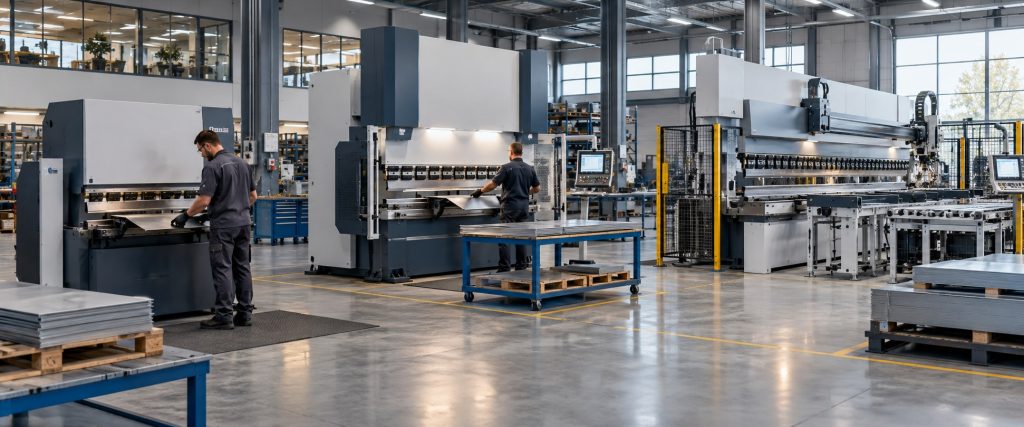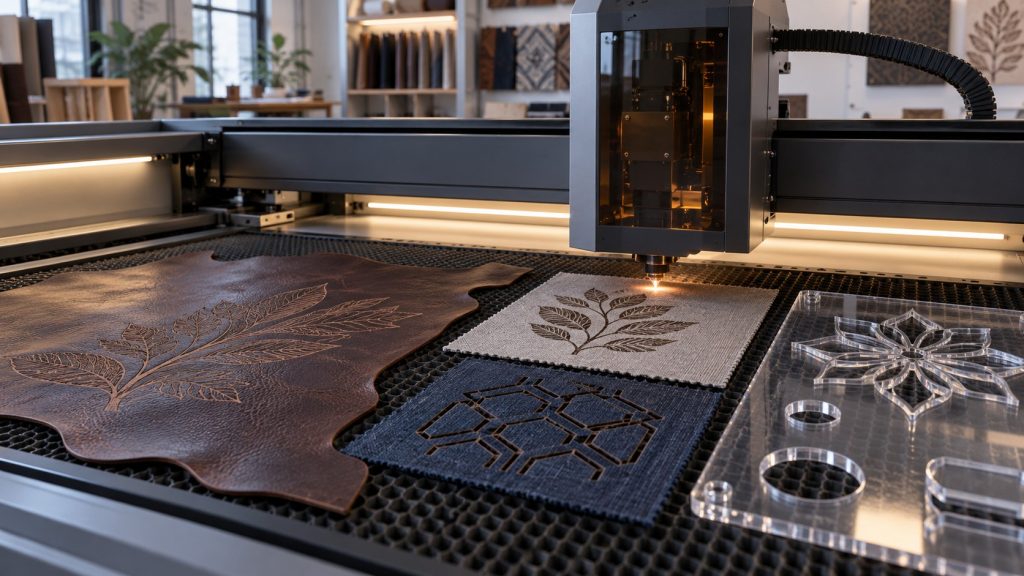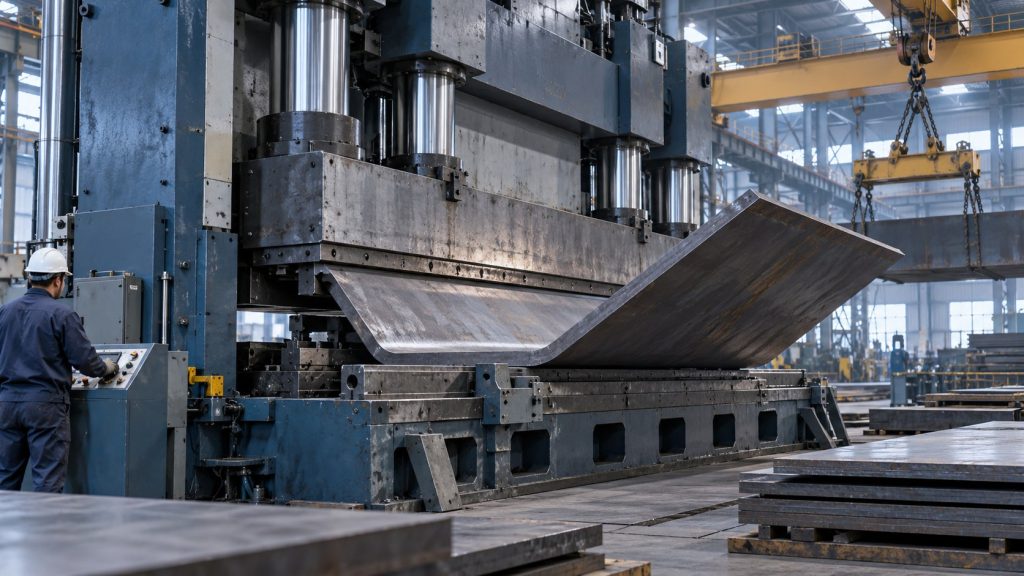
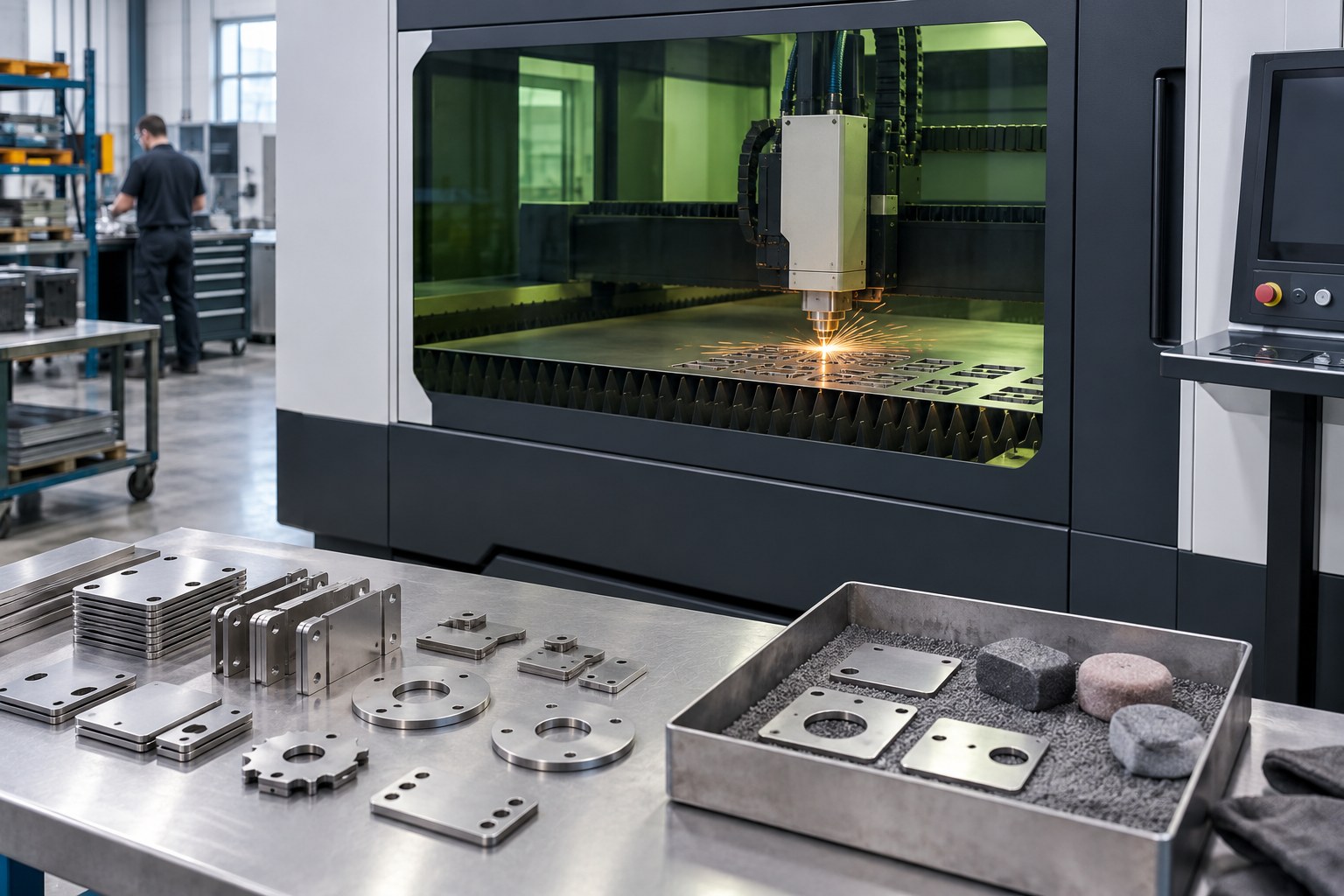
Deburring selection starts at the laser-cutting operation. The laser source, sheet material, cutting settings and part shape all affect the edge that will need to be handled later. For small parts and compact sheets, cutting and downstream finishing should be evaluated as one route.
BOGONG’s fiber laser cutting information positions the machine as a precision sheet-metal cutting solution for small-format production. Applications include sheet-metal parts, audio equipment and power-supply components, automotive and electronic parts, lighting fixtures and metal modules. Catalog references include BG-LC3050 and JH-6080V-10, with 800 W and 2000 W power examples and compact cutting areas.
Begin with the part list: material grade, thickness range, maximum sheet, smallest feature, contour requirement, expected edge condition and daily output. Then define which parts need deburring, edge rounding or surface brushing before bending, welding or coating. Cutting and deburring are separate operations; a clean-looking cut does not automatically remove every need for downstream finishing.
Use three levels of sample inspection: cutting geometry, edge condition and compatibility with the next process. Measure representative holes and contours against the drawing, inspect burrs or oxide at critical areas, and then run the part through the proposed deburring route to confirm abrasive, working width and fixtures.
The quotation should state the test material, cutting area, reference laser power, file format, fume extraction and loading requirements. Catalog accuracy and speed are references and should be verified on the buyer’s parts.
What happens to the edge after laser cutting?
Many purchasing decisions focus on whether a fiber laser cutter can produce the contour and overlook the edge condition afterward. Material, thickness, gas, settings, holes and part size can affect burrs, oxide and surface finishing. Parts going to bending, welding, coating or assembly should have deburring, sanding and edge-treatment requirements defined when the cutting equipment is evaluated.
Connect upstream and downstream work with one job record
A cutting-to-deburring job record can state drawing revision, material grade, thickness, cutting direction, critical holes, allowed edge condition and the next operation. The laser operator, sheet-metal deburring operator and bending operator then work from the same information. For small-format parts, also record nesting, holding method and first-piece results between batches.
Evaluate small-format equipment inside the complete route
BOGONG’s fiber laser cutting information addresses precision sheet metal and small-format production. Catalog references include BG-LC3050, JH-6080V-10 and 800 W and 2000 W power examples. Final selection should be based on material, thickness, maximum sheet, smallest feature and target edge condition. Cutting and metal surface finishing are separate upstream and downstream operations; cutting accuracy should not be treated as the same thing as final surface quality. Deburring, sanding or polishing should be assigned to the appropriate finishing equipment.
Start the inquiry with drawings and samples
Send part drawings, a material list, thickness range, maximum sheet, target edge condition and daily output. BOGONG can discuss the fiber laser cutter, sheet-metal deburring equipment and a downstream sanding route and prepare a project-based FOB quotation. Accuracy and speed in the catalog should be verified on real parts.
Questions about cutting and deburring
How should I compare a fiber laser cutting machine supplier?
Compare cut geometry, edge condition, loading, fume extraction and the proposed downstream process on the same samples. A small-format fiber laser cutting machine should be reviewed as part of the route that prepares the part for bending, welding, coating or assembly.
What deburring equipment should follow laser cutting?
Record sheet thickness, burr locations, oxide, part dimensions and the next operation first. Then decide whether the route needs sheet-metal deburring equipment, a sanding machine or an edge-rounding machine. The cutter makes the upstream contour; subsequent sanding, deburring and polishing require the corresponding metal-finishing equipment.
How should I compare metal deburring machine manufacturers?
Use one batch of cut samples and compare the edge before and after processing, surface texture, dimensional change, consumables and dust-extraction connections. BOGONG can discuss a factory-direct route from fiber laser cutting through deburring and sanding and prepare a quotation based on the target surface.
Review a cutting-to-finishing route
Visit the BOGONG Fiber Laser Cutting Machine. Send the material list, thickness, part drawings and target edge condition for a cutting-to-deburring process review.
Need a machine recommendation?
Send your workpiece drawings, material type, burr condition and target surface finish. We will suggest the right sanding machine and give you an FOB price range.