Application Guide | Stainless Steel Fabrication
Stainless Steel Kitchen Equipment Deburring and Brushing Workflow
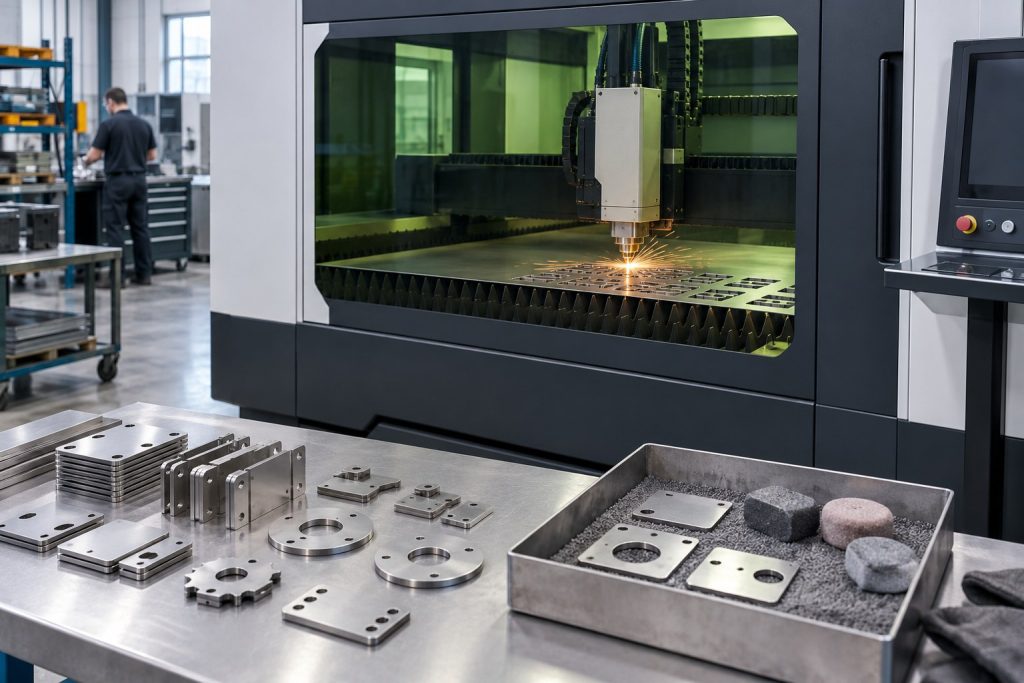
Commercial kitchen equipment uses many laser-cut stainless steel panels, covers, counters and sink parts. A controlled deburring and brushing workflow improves safety, surface consistency and assembly readiness before welding or final polishing.
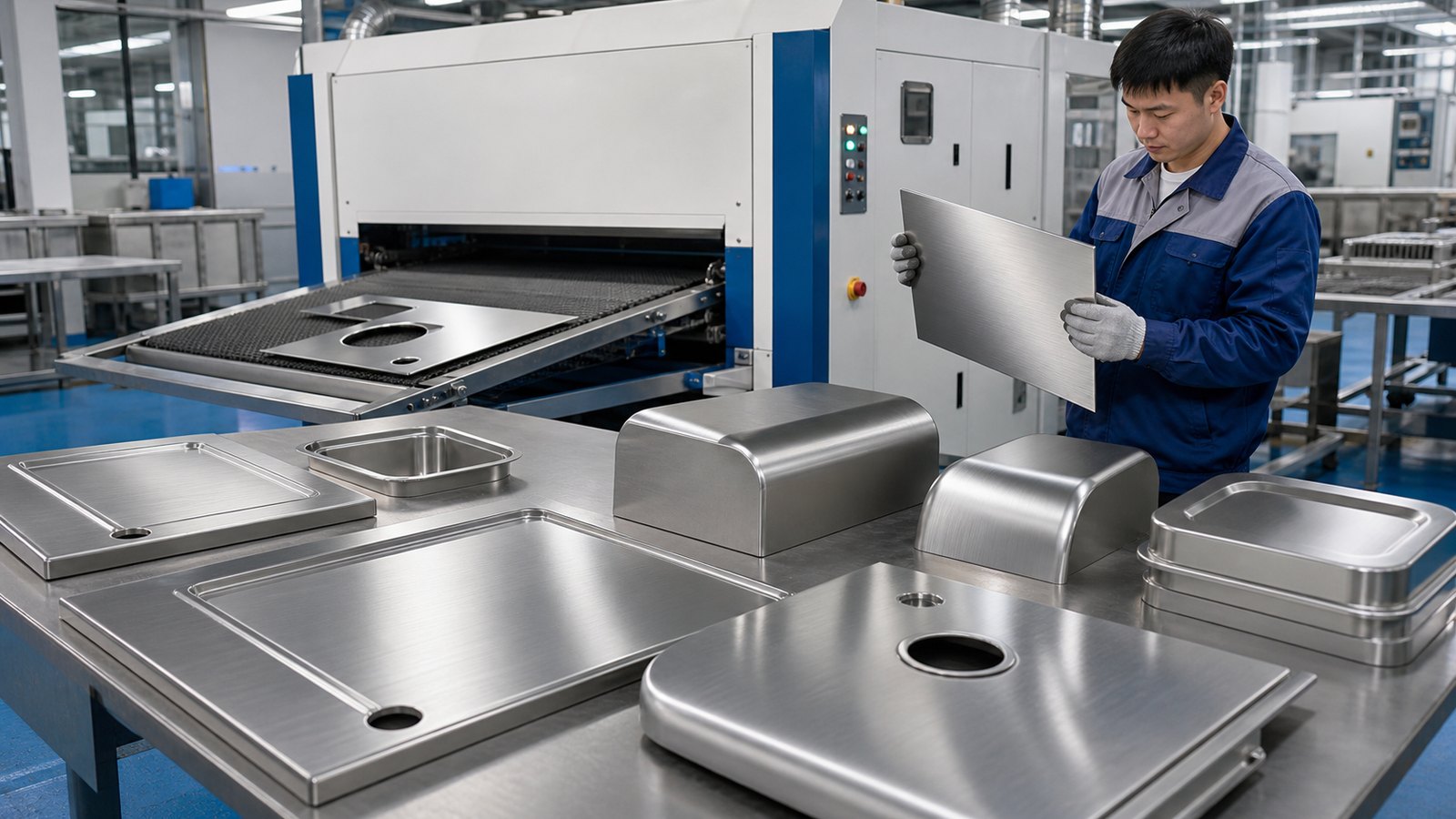
Overview
Stainless steel kitchen equipment parts should be deburred, edge-softened and brushed in a controlled sequence so visible surfaces keep a consistent grain while touch edges become safer for handling, welding and installation.
Why this topic matters in real production
Stainless steel kitchen equipment is judged by both function and appearance. A panel can be dimensionally correct but still fail inspection if the edge is sharp, the surface grain is inconsistent or burrs remain around slots and openings.
Automatic deburring and brushing help factories reduce hand polishing on repeated panels while keeping a cleaner surface for sinks, counters, food-service cabinets, ventilation covers and stainless equipment housings.
Typical application scenarios
Commercial counters and worktops
Long visible panels need a consistent brushed direction and safe edges before installation in kitchens and food-service areas.
Sink and basin components
Openings and curved contours require careful edge treatment to reduce sharp touch points before welding or assembly.
Stainless cabinet doors
Cabinet doors and drawer fronts need a repeatable surface grain so finished equipment looks consistent across a full project.
Recommended process route
- Protect the visible surface: Confirm whether the film remains on the sheet and which side needs brushing or scratch control.
- Remove laser-cut burrs: Use sanding or suitable deburring to remove bottom burrs and sharp points from cut edges.
- Control grain direction: Align brushing direction with the final visible orientation of the part.
- Soften touch edges: Use brush modules or process settings that reduce sharp edges without damaging the decorative surface.
- Inspect before welding: Check openings, corners and weld-prep zones before parts move to assembly.
Machine selection factors buyers should compare
| Factor | Why it matters | Practical note |
|---|---|---|
| Surface appearance | Kitchen equipment often has visible stainless steel surfaces. | Define grain direction and acceptable scratch level. |
| Part openings | Sinks, handles and ventilation slots create many internal edges. | Brush coverage matters around holes and contours. |
| Film protection | Protective film can affect friction and process choice. | Confirm whether the film is removed before finishing. |
| Food-service handling | Safer touch edges reduce injury risk during production and installation. | Do not rely only on manual spot grinding. |
Common selection mistakes to avoid
Most poor equipment decisions come from incomplete application data rather than from one single machine feature. Before confirming a purchase, make sure the supplier has seen the difficult parts, not only the easiest sample.
- Selecting by stainless steel kitchen equipment deburring as a phrase only, instead of checking the actual workpiece, defect and finish target.
- Comparing only the lowest machine price while ignoring consumables, workholding, dust extraction, fixtures, cooling, training or export packing.
- Using a single clean sample as proof of production stability without testing the smallest part, hardest material and most demanding edge or surface requirement.
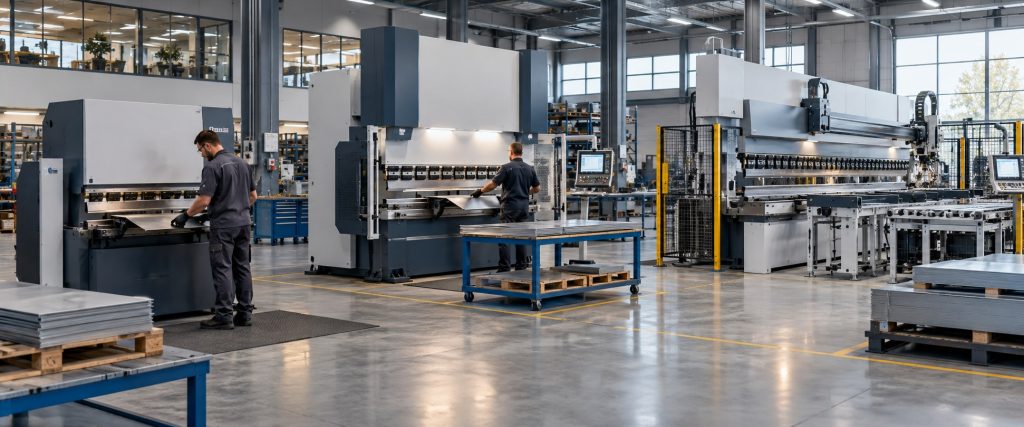
- Planning one machine in isolation instead of mapping the route from cutting, cleaning or deburring through folding, welding, coating, inspection and shipping.
How BOGONG fits this application
Qingdao Bogong Intelligent Equipment presents its English site around factory-direct metal surface finishing equipment for laser cutting post-processing, with related solutions covering deburring, brushing, edge rounding, CNC folding, laser welding, laser cleaning, tube polishing and coil handling. For this topic, the useful discussion with BOGONG should focus on the real part family, the upstream process, the downstream quality requirement and the export package required by the buyer.
A practical inquiry should ask for a workpiece-based recommendation rather than a generic catalog reply. That means the recommended machine or line should be connected to material, thickness, workholding, finish target, production volume, available floor space and required documents such as CE/ISO support where applicable.
Application Q&A
Can stainless steel parts be brushed after laser cutting?
Yes. Brushing can improve visible surface consistency after burr removal, but grain direction, film protection and abrasive selection must be controlled.
Will automatic deburring scratch decorative stainless steel?
A suitable process should be tested with the actual surface requirement. Protective handling and correct consumables are important.
Which parts need edge rounding in kitchen equipment?
Cabinet doors, sink openings, counters, covers and hand-contact edges usually benefit from edge softening.
Should deburring be done before welding?
Yes, removing burrs and unstable edges before welding helps fixturing, handling and later polishing.
What should I send for testing?
Send stainless grade, thickness, film condition, target grain, burr photos, part drawings and sample panels if possible.
What to send for a reliable quotation
For BOGONG or any factory-direct machinery supplier, the best quotation starts with real production information. A clear request helps the supplier recommend machine width, module sequence, workholding, dust collection, cooling, tooling or export packing without guessing.
- Material grade and thickness range
- Maximum and minimum workpiece size
- Photos of top surface, bottom burrs, holes, slots and edges
- Target finish: burr removal, edge rounding, brushing, coating preparation or welding preparation
- Expected daily output, shift schedule and available workshop space
- Factory voltage, dust collection requirement and export destination
Request a workpiece-based recommendation
Send drawings, material, part photos and target finish. BOGONG can discuss a suitable configuration for deburring, brushing, edge rounding, CNC folding, laser welding, laser cleaning, tube polishing or coil processing based on the actual production route.
Need a machine recommendation?
Send your workpiece drawings, material type, burr condition and target surface finish. We will suggest the right sanding machine and give you an FOB price range.