Process Guide | Small Parts Deburring
Deburring Small Laser-Cut Parts: Vacuum, Magnetic and Process Workholding Factors
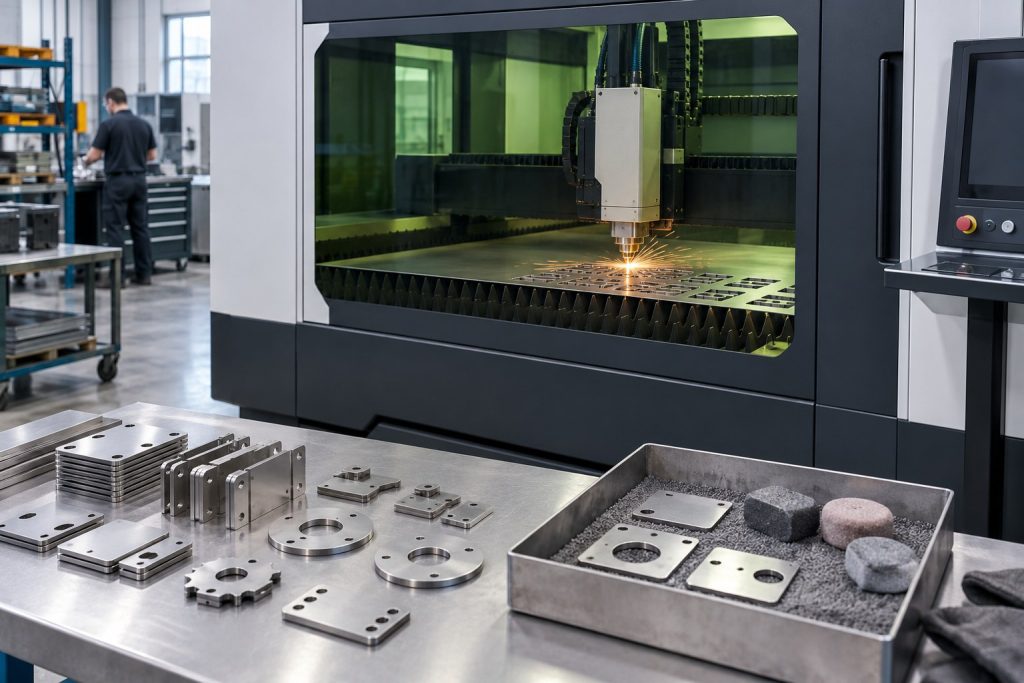
Small laser-cut brackets, plates and coupons can shift during sanding or brushing if workholding is not planned. This guide explains how vacuum, magnetic and process choices affect safe deburring of small parts.
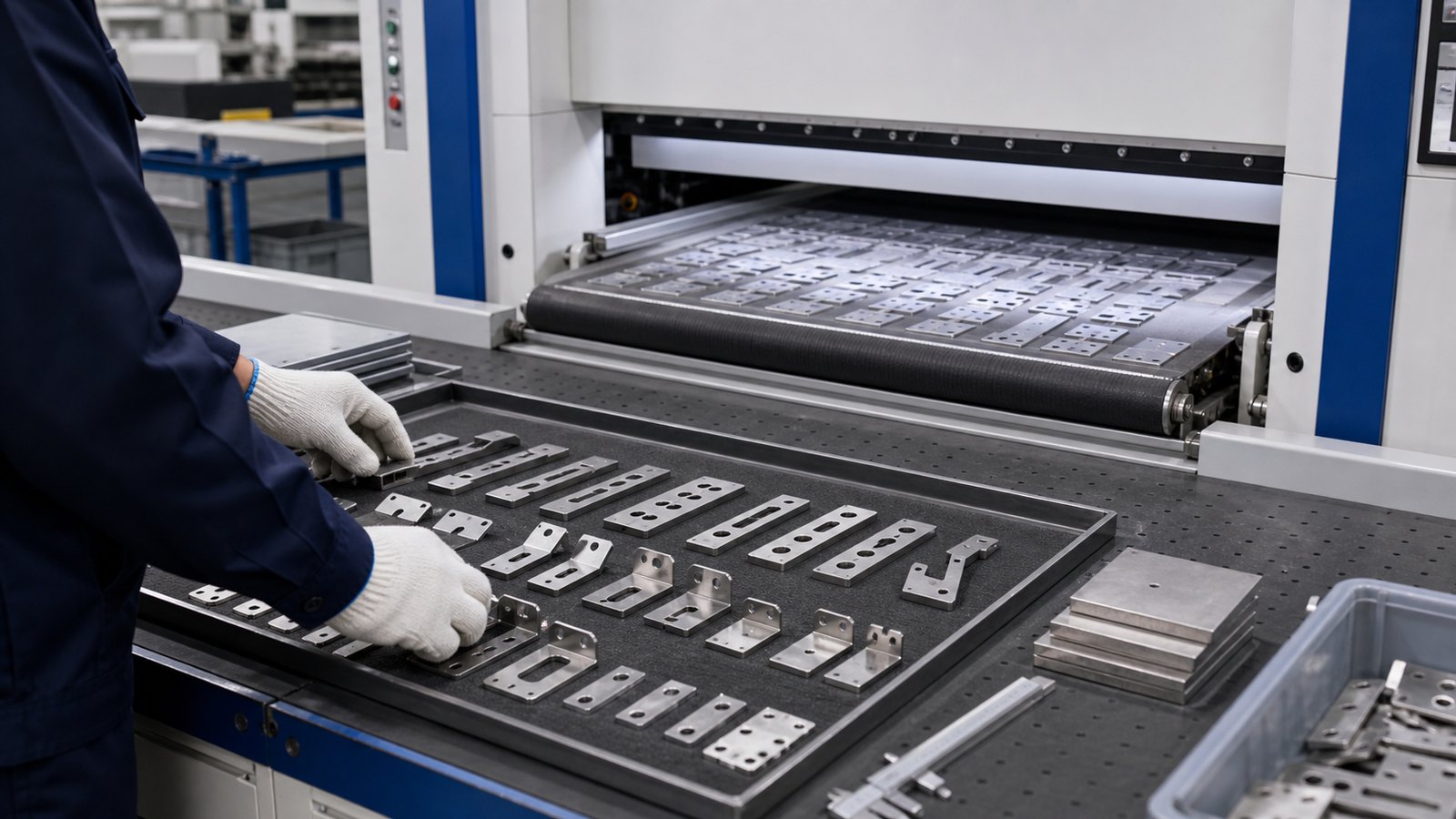
Overview
Small laser-cut parts require confirmed workholding before automatic deburring. Magnetic support may help ferrous parts, while vacuum support or special fixtures may be needed for stainless, aluminum or very small non-magnetic parts.
Why this topic matters in real production
Small parts are one of the most common reasons buyers ask for process testing. A part may look simple on a drawing, but if it is too small, too light or non-magnetic, it may not remain stable on a standard feed belt during deburring.
Workholding should be treated as part of machine selection. The solution depends on material, minimum size, hole pattern, thickness, burr condition and target finish.
Typical application scenarios
Small brackets and mounting plates
Short parts with holes and slots need stable support so they do not shift during brush contact.
Aluminum and stainless coupons
Non-magnetic parts may require vacuum support or process confirmation.
Mixed nested parts
Laser cutting job shops often process many small shapes that need sorting and safe feeding.
Recommended process route
- Measure the smallest part: Do not select only by maximum sheet size. The smallest stable part is critical.
- Identify material magnetism: Carbon steel and stainless steel may behave differently under magnetic support.
- Check contact area: Parts with many holes may have less surface for vacuum holding.
- Control feed loading: Avoid loose piles of small parts entering the machine randomly.
- Run a sample pass: Test the real minimum size before confirming the machine configuration.
Machine selection factors buyers should compare
| Factor | Why it matters | Practical note |
|---|---|---|
| Minimum part size | The smallest part determines holding risk. | Send dimensions and photos. |
| Material | Magnetic support only applies to suitable ferrous materials. | Confirm material grade. |
| Hole pattern | Open areas can reduce vacuum holding. | Provide drawings or samples. |
| Burr condition | Heavy burrs require more processing force. | Heavy burrs increase holding demand. |
Common selection mistakes to avoid
Most poor equipment decisions come from incomplete application data rather than from one single machine feature. Before confirming a purchase, make sure the supplier has seen the difficult parts, not only the easiest sample.
- Selecting by deburring small laser cut parts as a phrase only, instead of checking the actual workpiece, defect and finish target.
- Comparing only the lowest machine price while ignoring consumables, workholding, dust extraction, fixtures, cooling, training or export packing.
- Using a single clean sample as proof of production stability without testing the smallest part, hardest material and most demanding edge or surface requirement.
- Planning one machine in isolation instead of mapping the route from cutting, cleaning or deburring through folding, welding, coating, inspection and shipping.
How BOGONG fits this application
Qingdao Bogong Intelligent Equipment presents its English site around factory-direct metal surface finishing equipment for laser cutting post-processing, with related solutions covering deburring, brushing, edge rounding, CNC folding, laser welding, laser cleaning, tube polishing and coil handling. For this topic, the useful discussion with BOGONG should focus on the real part family, the upstream process, the downstream quality requirement and the export package required by the buyer.
A practical inquiry should ask for a workpiece-based recommendation rather than a generic catalog reply. That means the recommended machine or line should be connected to material, thickness, workholding, finish target, production volume, available floor space and required documents such as CE/ISO support where applicable.
Application Q&A
Can automatic deburring process small parts?
Yes, but workholding must be confirmed based on material, size and geometry.
When is vacuum workholding useful?
Vacuum support can help hold non-magnetic or small parts, but the actual part shape and contact area must be tested.
When is magnetic holding useful?
Magnetic holding can help suitable ferrous parts, but it does not work for all stainless or aluminum materials.
What is the main risk with small parts?
Parts may shift, overlap or become unstable during sanding or brushing if support is insufficient.
What should I send for evaluation?
Send the smallest and thinnest parts, material, thickness, hole pattern, burr photos and target finish.
What to send for a reliable quotation
For BOGONG or any factory-direct machinery supplier, the best quotation starts with real production information. A clear request helps the supplier recommend machine width, module sequence, workholding, dust collection, cooling, tooling or export packing without guessing.
- Material grade and thickness range
- Maximum and minimum workpiece size
- Photos of top surface, bottom burrs, holes, slots and edges
- Target finish: burr removal, edge rounding, brushing, coating preparation or welding preparation
- Expected daily output, shift schedule and available workshop space
- Factory voltage, dust collection requirement and export destination
Request a workpiece-based recommendation
Send drawings, material, part photos and target finish. BOGONG can discuss a suitable configuration for deburring, brushing, edge rounding, CNC folding, laser welding, laser cleaning, tube polishing or coil processing based on the actual production route.
Need a machine recommendation?
Send your workpiece drawings, material type, burr condition and target surface finish. We will suggest the right sanding machine and give you an FOB price range.