Industry Guide | Sheet Metal Deburring
How to Choose a Sheet Metal Deburring Machine for Laser-Cut Parts
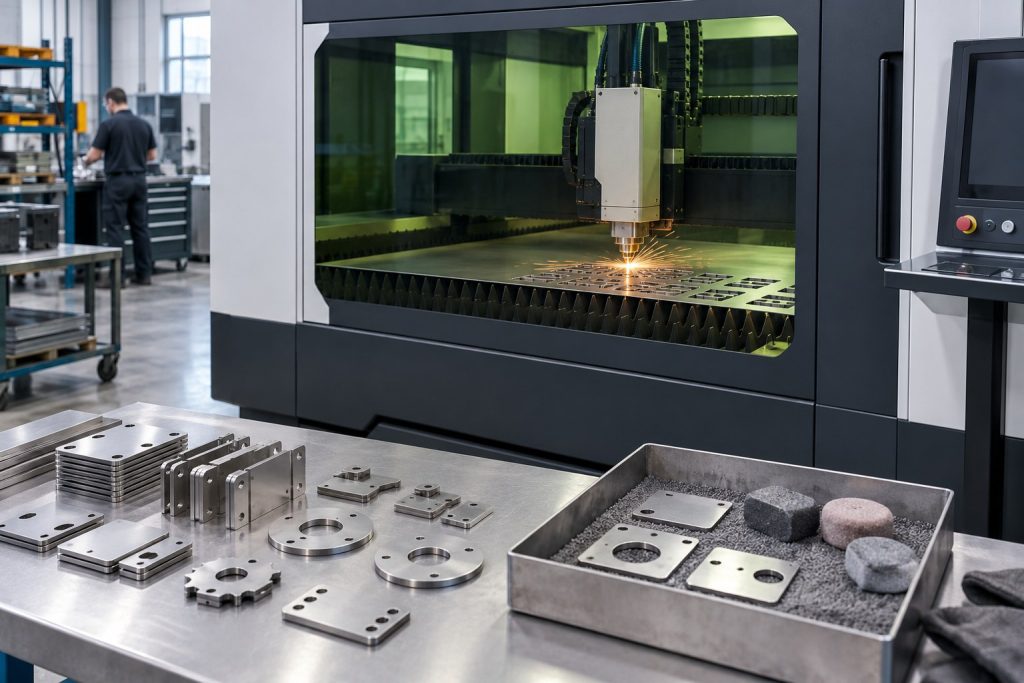
Laser cutting gives sheet metal factories speed, but the cutting edge still decides whether a part is safe to handle, ready for coating and easy to assemble. This guide explains how buyers can select an automatic deburring machine by looking at burr type, material, part size, target finish and export service requirements.
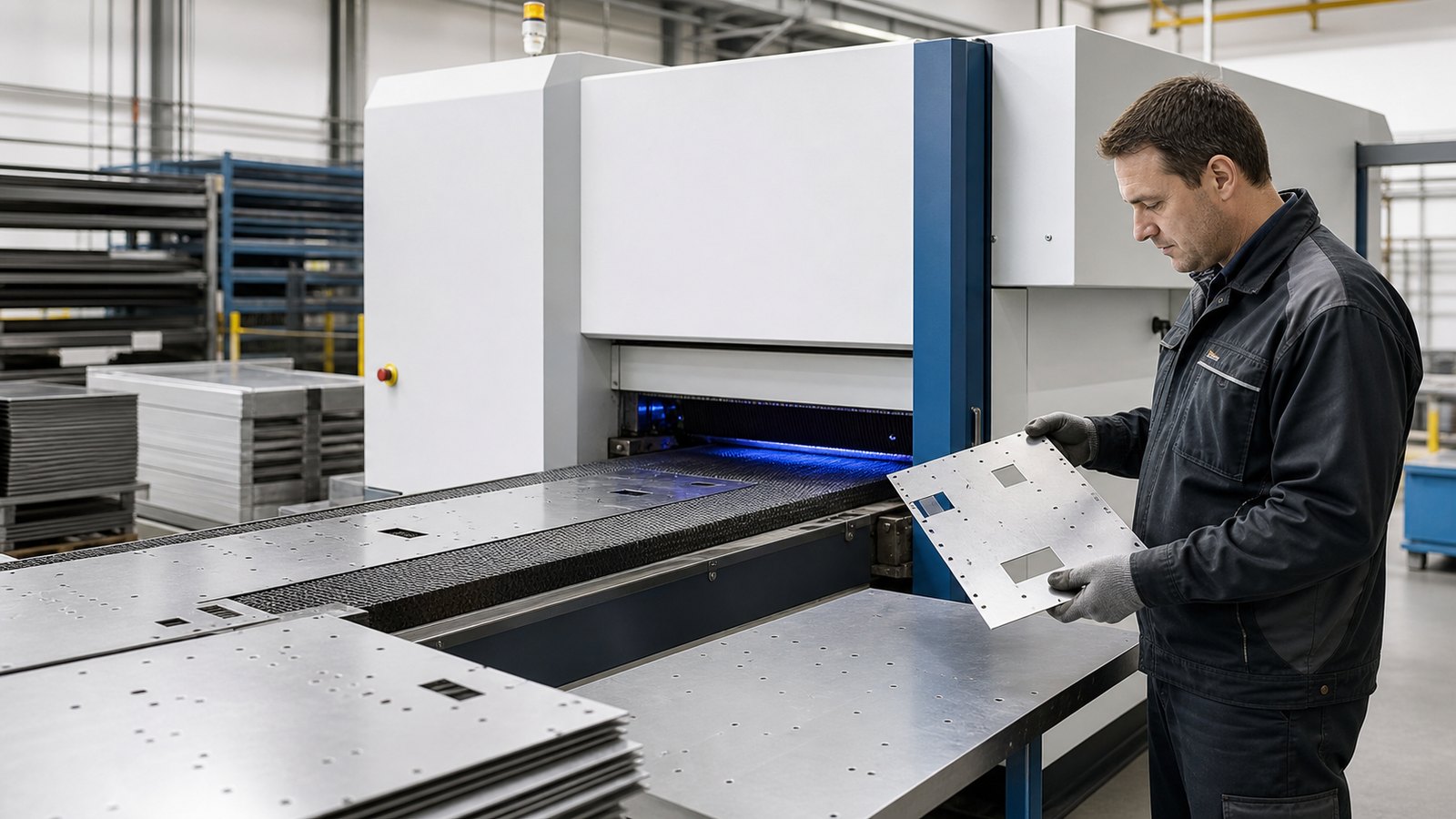
Overview
A suitable sheet metal deburring machine for laser-cut parts should combine abrasive belt sanding for burr removal with brush or rounding modules when the factory needs safer edges, coating preparation and more repeatable quality.
Why this topic matters in real production
In many laser cutting workshops, the cutting machine is upgraded first and the finishing process is upgraded later. That creates a bottleneck: parts are cut quickly, but operators still spend hours removing burrs with hand grinders. The result depends on operator skill, shift fatigue and the complexity of the part.
BOGONG positions its equipment around factory-direct metal surface finishing for laser cutting post-processing. For an overseas buyer, the right question is not simply which machine is cheaper. The better question is which configuration can produce the required edge quality every day with realistic labor, consumable and dust-control costs.
Typical application scenarios
Laser cutting job shops
Mixed customer orders usually include stainless steel, carbon steel, aluminum and galvanized sheet. A flexible deburring configuration helps the workshop handle different burr conditions without resetting the whole finishing area for every batch.
Electrical enclosure plants
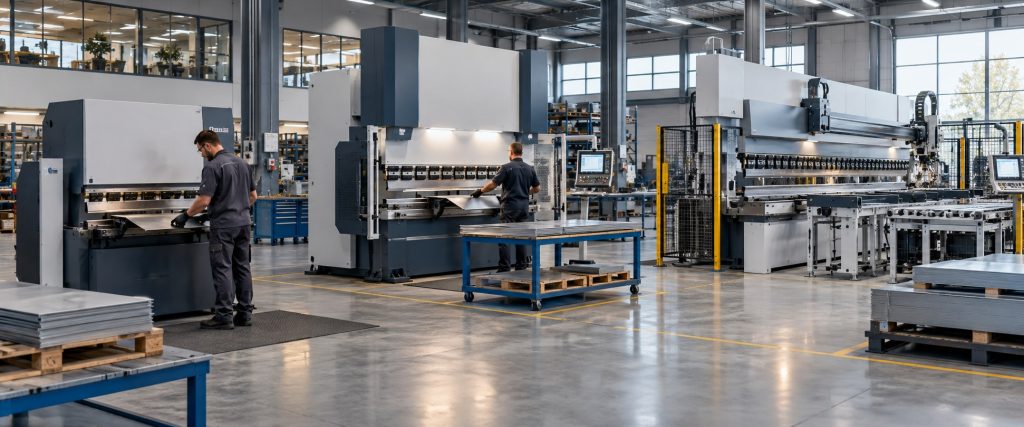
Cabinet doors, side panels, mounting plates and ventilation slots need safer edges before bending, coating and assembly. Repeatability is more important than a single attractive sample.
OEM sheet metal suppliers
When a supplier ships parts to machinery, HVAC, elevator or furniture customers, consistent edges reduce complaints and make downstream assembly more predictable.
Recommended process route
- Inspect the burr: Check bottom burr height, slag points, oxide, hole edges and internal contours instead of judging only the top surface.
- Match the first module: Use abrasive belt sanding when the main problem is burr removal, surface leveling or heavier cutting marks.
- Add edge rounding when needed: Brush or rounding modules help soften inner and outer contours, especially before powder coating or frequent manual handling.
- Confirm workholding: Small parts, non-magnetic materials and thin sheets may require vacuum support, magnetic support or process testing.
- Test the real part: A trial with real material and target finish is more reliable than choosing only by machine width.
Machine selection factors buyers should compare
| Factor | Why it matters | Practical note |
|---|---|---|
| Burr severity | Heavy burrs need stronger initial sanding; light burrs may only need brushing and edge softening. | Send bottom-side photos and sample parts. |
| Material mix | Stainless steel, aluminum, carbon steel and galvanized sheet respond differently to abrasives and brush pressure. | List current and future materials. |
| Part geometry | Holes, slots and nested contours make brush coverage more important. | Include drawings or photos of typical parts. |
| Finish target | Burr removal, edge rounding and visible brushing are different process goals. | Define the accepted edge feel and surface appearance. |
Common selection mistakes to avoid
Most poor equipment decisions come from incomplete application data rather than from one single machine feature. Before confirming a purchase, make sure the supplier has seen the difficult parts, not only the easiest sample.
- Selecting by sheet metal deburring machine for laser cut parts as a phrase only, instead of checking the actual workpiece, defect and finish target.
- Comparing only the lowest machine price while ignoring consumables, workholding, dust extraction, fixtures, cooling, training or export packing.
- Using a single clean sample as proof of production stability without testing the smallest part, hardest material and most demanding edge or surface requirement.
- Planning one machine in isolation instead of mapping the route from cutting, cleaning or deburring through folding, welding, coating, inspection and shipping.
How BOGONG fits this application
Qingdao Bogong Intelligent Equipment presents its English site around factory-direct metal surface finishing equipment for laser cutting post-processing, with related solutions covering deburring, brushing, edge rounding, CNC folding, laser welding, laser cleaning, tube polishing and coil handling. For this topic, the useful discussion with BOGONG should focus on the real part family, the upstream process, the downstream quality requirement and the export package required by the buyer.
A practical inquiry should ask for a workpiece-based recommendation rather than a generic catalog reply. That means the recommended machine or line should be connected to material, thickness, workholding, finish target, production volume, available floor space and required documents such as CE/ISO support where applicable.
Application Q&A
What machine removes burrs from laser-cut sheet metal?
A feed-through sheet metal deburring machine with abrasive belt and brush modules is commonly used to remove burrs and soften edges after laser cutting.
Can automatic deburring replace manual grinding?
It can replace most repetitive flat-part grinding. Complex welded structures or local defects may still need touch-up, but total labor and quality fluctuation are reduced.
Do all laser-cut parts need edge rounding?
Not all parts need the same radius, but parts for coating, frequent handling, exposed edges or export inspection usually benefit from controlled edge rounding.
What information should I send for model selection?
Send material, thickness range, part size, burr photos, target finish, capacity target, voltage and workshop layout.
Why choose factory-direct equipment?
Factory-direct communication helps align workpiece testing, machine configuration, export documents, packing and spare parts with the actual production need.
What to send for a reliable quotation
For BOGONG or any factory-direct machinery supplier, the best quotation starts with real production information. A clear request helps the supplier recommend machine width, module sequence, workholding, dust collection, cooling, tooling or export packing without guessing.
- Material grade and thickness range
- Maximum and minimum workpiece size
- Photos of top surface, bottom burrs, holes, slots and edges
- Target finish: burr removal, edge rounding, brushing, coating preparation or welding preparation
- Expected daily output, shift schedule and available workshop space
- Factory voltage, dust collection requirement and export destination
Request a workpiece-based recommendation
Send drawings, material, part photos and target finish. BOGONG can discuss a suitable configuration for deburring, brushing, edge rounding, CNC folding, laser welding, laser cleaning, tube polishing or coil processing based on the actual production route.
Need a machine recommendation?
Send your workpiece drawings, material type, burr condition and target surface finish. We will suggest the right sanding machine and give you an FOB price range.