Application Guide | Weld Finishing
Laser Weld Seam Cleaning for Stainless Sheet Metal Parts
Stainless weld seams often need discoloration removal and surface preparation after welding. Laser cleaning can support a cleaner post-weld workflow.
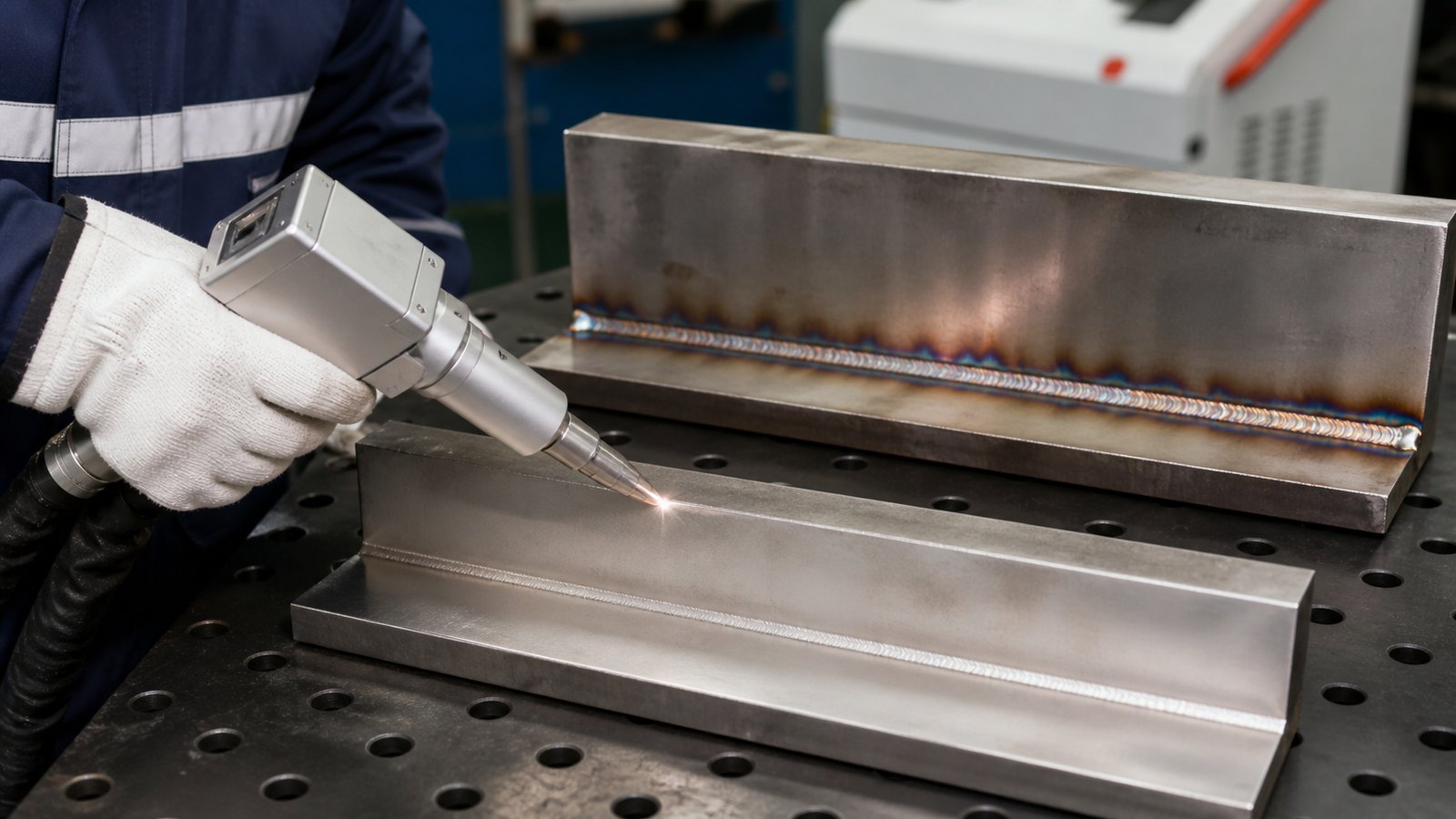
Overview
Laser weld seam cleaning helps remove heat tint, oxide and surface discoloration on stainless sheet metal when the factory needs cleaner appearance before polishing, assembly or delivery.
Why this matters for sheet metal factories
Qingdao Bogong Intelligent Equipment presents its English site around factory-direct metal surface finishing equipment for laser cutting post-processing. The company’s main business covers laser cutting sanding machines, sheet metal polishing and deburring machines, edge grinding and edge rounding equipment, CNC folding machines, laser welding equipment, laser cleaning equipment, tube polishing and related production-line support.
For an overseas buyer, laser weld seam cleaning stainless steel is not only a search phrase. It is a production problem involving material flow, operator workload, quality inspection, consumables, workholding, dust control, packing, documents and spare parts. A reliable recommendation should start from real parts and downstream quality requirements instead of only comparing catalog model names.
Typical application scenarios
- Stainless cabinets and kitchen equipment: This scenario should be checked against material, thickness, part size, finish target and downstream process before equipment selection.
- Visible weld seams on thin sheet housings: This scenario should be checked against material, thickness, part size, finish target and downstream process before equipment selection.
- Post-weld cleanup before brushing or inspection: This scenario should be checked against material, thickness, part size, finish target and downstream process before equipment selection.
Recommended evaluation route
- Define the part family: Group parts by material, thickness, maximum size, minimum size, holes, slots, visible surfaces and downstream process.
- Inspect the real defect: Use photos and samples to show burr height, slag, oxide, surface scratches, weld discoloration or bend difficulty.
- Set the accepted result: Decide whether the goal is burr removal, edge rounding, brushed finish, weld preparation, coating preparation, forming accuracy or export-ready quality.
- Confirm process constraints: Check workholding, dust extraction, fixture design, cooling method, floor layout, operator training and maintenance access.
- Request sample evidence: Ask for before-and-after results, process notes, consumable suggestions and videos if the project is evaluated remotely.
Buyer selection checklist
| Item | What to verify | Why it matters |
|---|---|---|
| Material and thickness | Send exact grades and thickness range. | Different metals react differently to sanding, brushing, bending, welding and cleaning. |
| Part size range | Include the largest panel and smallest part. | Working width, support, vacuum or magnetic holding and handling method depend on real size. |
| Finish target | Define edge feel, surface grain, weld appearance or coating readiness. | Different targets require different modules, consumables or fixtures. |
| Production volume | Share daily output, shift schedule and batch mix. | Throughput affects machine configuration, consumable stock and automation value. |
| Export support | Confirm packing, documents, spare parts and training. | Overseas projects need a complete delivery package, not only the machine body. |
Common mistakes to avoid
Do not select a machine only by the lowest quoted price or by a single attractive sample photo. The harder question is whether the process can hold quality during normal production, when operators change shifts, consumables wear down and mixed batches arrive from cutting or forming.
Another common mistake is planning each machine in isolation. Deburring affects coating and welding. Folding affects assembly accuracy. Laser cleaning affects weld and coating preparation. Dust collection and maintenance affect uptime. Treat the equipment as part of a production route, not as a standalone purchase.
Quotation data that improves recommendation quality
A useful quotation should describe the production problem, not only the machine name. Before contacting a supplier, prepare the current process route, the pain point you want to remove and the acceptance standard your customer or inspector uses. If the project involves export purchase, also confirm destination country, voltage, packing preference and whether certificates or customs documents must be prepared before shipment.
For BOGONG, the most useful inquiry package includes part drawings, real workpiece photos, maximum and minimum part sizes, material grades, thickness range, burr or surface defect close-ups, finish samples, production volume, workshop layout and downstream process. For laser welding, robotic grinding or folding projects, add fixture photos, bend drawings, weld locations, frame dimensions and current manual process videos. This information allows the supplier to discuss equipment configuration, consumables, sample testing, spare parts and delivery scope with fewer assumptions.
Application Q&A
What does weld seam cleaning remove?
It can remove heat tint, oxide and some surface residue depending on material and parameters.
Does it replace all polishing?
Not always. It can reduce cleanup effort, but decorative finishes may still need brushing or polishing.
What safety is needed?
Laser cleaning requires trained operators, eye protection and controlled work areas.
What should I send to BOGONG for a useful quotation?
Send material grade, thickness, part drawings, part photos, burr or surface defect photos, target finish, daily output, voltage, workshop layout and export destination. For welding or robotic applications, also send joint details, fixture photos and current process videos if available.
Request a workpiece-based recommendation
If your factory is evaluating laser weld seam cleaning stainless steel, prepare the difficult samples and target quality standard first. BOGONG can then discuss a matching route for deburring, brushing, edge rounding, CNC folding, laser welding, laser cleaning, tube polishing, coil processing, dust collection and export support.
Need a machine recommendation?
Send your workpiece drawings, material type, burr condition and target surface finish. We will suggest the right sanding machine and give you an FOB price range.