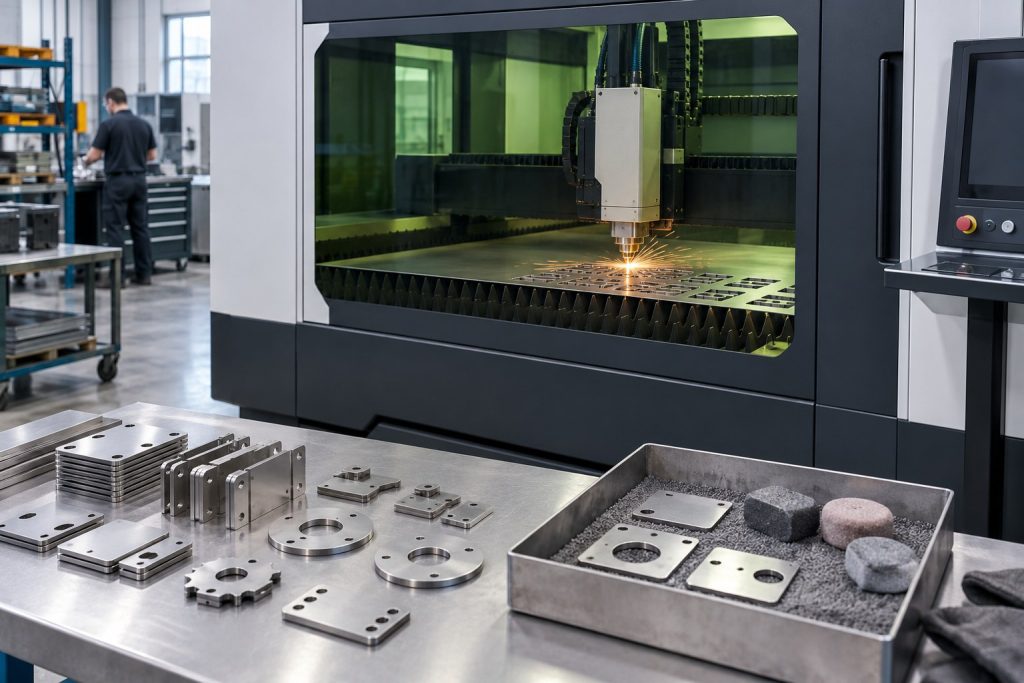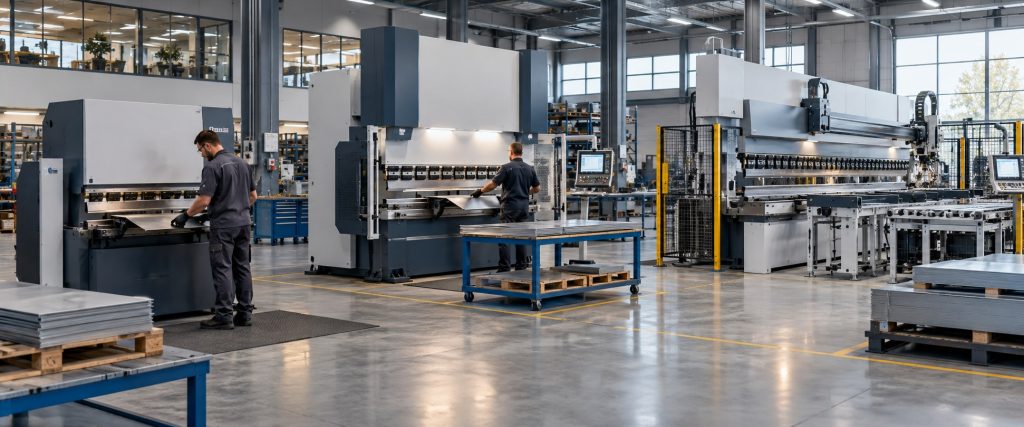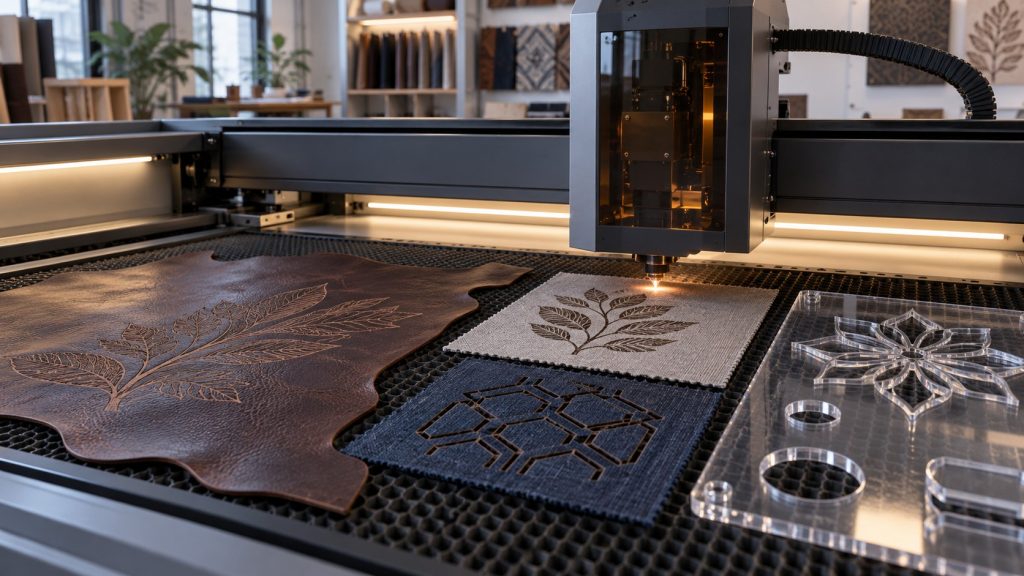
Every laser cutting factory hits the same wall sooner or later: the cut parts look precise on the drawing, but the edges are sharp enough to slice a glove and rough enough to reject a coating adhesion test. Buying the right deburring machine is not about picking the biggest or the cheapest model. It is about matching the machine to your material mix, part size, daily volume and downstream process. This guide walks through the decisions that actually matter when you evaluate laser cutting sanding machines from Chinese manufacturers such as Bogong.
Why Laser-Cut Parts Need Deburring Before the Next Process
Laser cutting melts metal with a focused beam. As the beam advances, molten material re-solidifies on the underside of the sheet, forming burrs, slag and oxide skin. On carbon steel the dross is hard and dark. On stainless steel it changes the chromium oxide layer and creates rust risks. On aluminum the burrs are feather-thin and flexible, easy to miss but sharp enough to tear assembly gloves.
If you send these parts straight to welding, the burr creates a gap that traps slag and causes porosity. If you send them to powder coating, the sharp edge chips the paint film within weeks. If workers handle them manually, you face safety violations and compensation risk. Deburring is therefore not a cosmetic step. It is a quality gate.
Key Specifications to Compare
Working Width
The working width is the maximum dimension perpendicular to the feeding direction that can pass through the abrasive heads. A 630 mm machine handles small brackets and enclosures. A 1000 mm machine covers standard sheet metal panels. A 1300 mm machine takes large architectural panels and wide agricultural machinery covers. Choose the smallest width that fits your largest part, because extra width means extra purchase cost, motor power and floor space.
Abrasive Head Configuration
Not all sanding machines use the same abrasive layout. A basic deburring station uses planetary abrasive drums to grind the top and bottom faces and the edges in one pass. A brushing station adds Scotch-Brite style heads to create a satin or hairline finish. A wet rinse station uses water to cool the part and flush metal dust. If your downstream process is welding, deburring only is enough. If your parts are visible kitchen equipment or elevator panels, you need brushing heads. If you process aluminum or titanium, wet operation prevents clogging and heat distortion.
Feed Speed and Throughput
Feed speed is measured in meters per minute. A typical range is 0.5 to 4 m/min. Thicker plates and heavier burrs need slower feed. Thin sheets with light slag can run faster. Calculate your required hourly throughput before you buy. A machine that feeds at 1 m/min with a 1000 mm width can process roughly 60 square meters per hour. If your laser cutter outputs 80 square meters per hour, you need either a faster machine or two shifts.
Wet Operation vs Dry Operation
Dry machines are cheaper, simpler to install and easier to move. They rely on a dust collector to capture metal particulate. Wet machines use a water curtain to suppress dust, cool the workpiece and extend abrasive life. Wet operation is strongly recommended for aluminum, magnesium and titanium because dry aluminum dust is explosive. Wet operation also produces a cleaner surface for anodizing or chemical treatment. The trade-off is higher water consumption, a sludge disposal requirement and the need for corrosion-resistant machine components.
Dust Collection Requirements
Metal sanding generates fine particulate that is hazardous to lungs and can create slip hazards on the floor. A dust collector matched to your machine width is not optional. For a 1000 mm dry machine, plan for at least 2500 to 3500 cubic meters per hour of airflow. The filter should be rated for metal dust, not wood dust. Position the collector outside the workshop or use a silencer if noise limits apply. Check local regulations; some jurisdictions require continuous monitoring of airborne metal dust levels.
How to Verify a Chinese Factory Before You Order
Buying from a Qingdao factory can cut capital expenditure by thirty to fifty percent compared to European brands, but verification is essential. Request the CE certificate number and verify it on the notified body database. Ask for a live video call from the workshop, not a polished marketing clip. Request sample processing of your actual parts, not generic demo pieces. Check whether the factory holds ISO 9001 and whether the certificate scope covers sanding machine manufacture. Ask for reference customers in your region and call them.
Typical Price Range and Return on Investment
A basic 630 mm dry deburring machine from a Qingdao factory starts around USD 12,000 FOB. A 1000 mm machine with brushing heads and dust collector ranges from USD 18,000 to 28,000. A 1300 mm heavy-duty wet system with full accessories can reach USD 35,000 to 45,000. Compare this to the labor cost of manual grinding. If four workers spend half their day deburring at USD 800 per month each, the annual labor cost is USD 19,200. An automatic machine replaces most of that labor and pays for itself within twelve to eighteen months while delivering consistent quality.
Conclusion
Choosing a laser cutting deburring machine comes down to three questions: what is your largest part size, what finish does the next process require, and how many parts do you process per day? Match the working width to your parts, match the abrasive configuration to your finish target, and match the throughput to your laser cutter output. Add wet operation if you process aluminum, and add a matched dust collector for every dry machine. Verify the factory before you pay, and calculate the labor savings to justify the investment.
Send your workpiece drawings, material list and daily output to Bogong for a configuration recommendation and FOB quotation.
Need a machine recommendation?
Send your workpiece drawings, material type, burr condition and target surface finish. We will suggest the right sanding machine and give you an FOB price range.