Overview
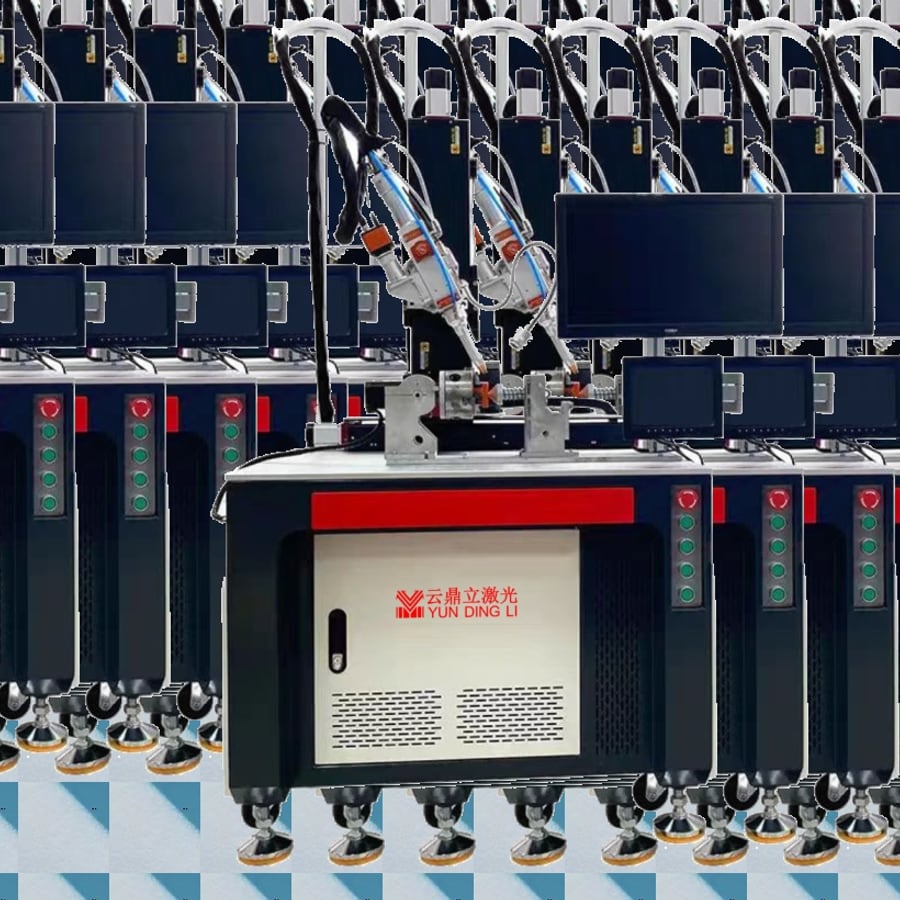
Bogong supplies a complete range of handheld and robotic laser welding equipment for metal fabrication plants that demand high-efficiency welding with minimal heat-affected zones. Our systems cover fiber laser sources from 1000 W to 3000 W, configured as manual wobble guns for on-site repair and prototype work, or as six-axis robotic cells for high-volume production lines.
Compared with traditional MIG and TIG welding, laser welding delivers 3–5× faster travel speeds, 60–80 % less heat input, and near-zero spatter. The result is cleaner welds, less post-weld grinding, reduced distortion, and lower filler-wire consumption. Every system is CE-certified, built at our Qingdao facility, and available factory-direct with MOQ of one set.
How It Works
A fiber laser generator pumps infrared energy through a flexible armored cable to a processing head. In handheld mode, the operator guides the gun along the joint; an integrated wobble mechanism oscillates the beam to bridge gaps and improve wetting. In robotic mode, a six-axis articulated arm follows a programmed path with sub-millimeter repeatability, while the laser power and wobble parameters adjust automatically for joint geometry.
The concentrated heat source melts only a narrow zone, so surrounding material stays cool. Distortion is minimal, even on thin stainless steel or aluminum sheets down to 0.5 mm. For thicker sections, the keyhole welding mode penetrates up to 6 mm in a single pass with full fusion and no porosity when shielding gas is properly applied.
Key Advantages
1. Dramatically Faster Welding
On 2 mm stainless steel, a laser hand gun travels at 1.5–2.5 m/min versus 0.3–0.5 m/min for TIG. A robotic cell can sustain 2–3 m/min on long straight seams. For a fabrication shop producing hundreds of meters of weld per week, this speed advantage translates directly into higher output and shorter lead times.
2. Minimal Heat-Affected Zone (HAZ)
The laser’s focused spot size (typically 0.1–0.3 mm) concentrates energy exactly where it is needed. The HAZ is often less than 1 mm wide, preserving base-metal properties in heat-sensitive alloys such as 316L stainless or 6061-T6 aluminum. Post-weld annealing or stress relieving is rarely required.
3. Near-Zero Spatter and Cleaning
Because laser welding uses minimal filler wire and controlled shielding gas, spatter is drastically reduced compared with MIG. In many applications—kitchen equipment, medical carts, visible architectural frames—the as-welded bead is acceptable without grinding or wire brushing, saving labor and consumables.
4. Flexible Configuration: Handheld to Fully Automatic
Start with a handheld wobble gun for prototypes, repair work, and one-off custom jobs. When volume grows, add a robotic arm and positioner to create an unmanned cell. Both configurations share the same laser source and control software, so your investment scales smoothly with your business.
5. Lower Consumable Cost
Wire consumption is 30–50 % lower than MIG because the narrow joint requires less fill. No contact tips, nozzles, or diffuser parts wear out every few shifts. The only routine consumables are protective lenses (cleaned or replaced weekly) and shielding gas. Over a year, consumable savings can exceed the cost of the laser source itself.
6. Welds Dissimilar Metals
Laser welding can join combinations that are difficult for arc processes—stainless to carbon steel, aluminum to copper, titanium to stainless—with the correct beam parameter set and filler strategy. This opens new product opportunities for fabricators serving multi-material industries such as electronics, automotive, and energy.
Typical Applications
- Kitchen and catering equipment – Weld stainless steel counters, sinks, and hoods with cosmetic-quality beads that need no post-grinding.
- Medical and laboratory furniture – Produce clean, slag-free joints on 304 and 316L tubing and sheet for hygienic environments.
- Electrical cabinets and enclosures – Fast, distortion-free welding of thin-gauge steel and aluminum boxes for switchgear and control panels.
- Automotive exhaust and trim – Join stainless tubing and brackets with minimal HAZ, preserving corrosion resistance.
- Aluminum window and facade frames – Welded corners are stronger than mechanical joints and eliminate visible fasteners.
- Copper busbar and battery tray welding – High-reflectivity copper is welded successfully with our 2000–3000 W sources and optimized beam delivery.
Optional Configurations
| Option | Description | When to Choose |
|---|---|---|
| 1500 W / 2000 W / 3000 W source | Raycus or IPG fiber laser generator | Thicker material or higher travel speed |
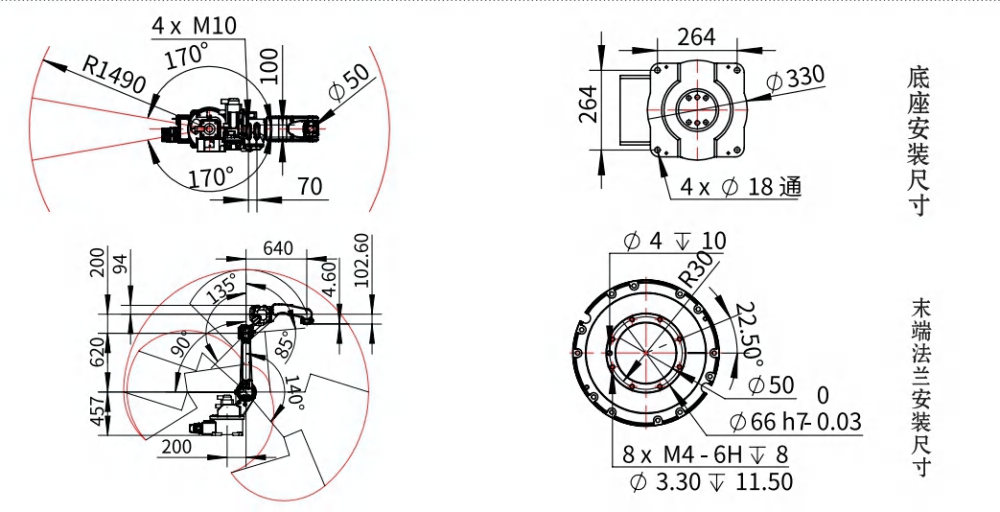
| Robotic six-axis arm | Industrial robot with welding torch integration | High-volume, repeatable production |
| Rotary positioner | Dual-axis turntable for circular seams | Tanks, tubes, and cylindrical parts |
| Wobble welding head | Oscillating beam for gap bridging | Sheet-metal joints with fit-up tolerance |
| Wire feeder | Cold-wire or hot-wire feed unit | Thick sections or dissimilar-metal joints |
| Fume extraction arm | Articulated extraction at the torch | Indoor workshops with air-quality regulations |
Maintenance & Support
Daily maintenance is limited to cleaning the protective lens, checking coolant level and flow, and verifying shielding-gas pressure. The fiber laser source is a sealed unit with a rated diode life of 100,000 hours; there are no lamps, rods, or mirrors to align. Chiller filters are changed quarterly. We supply a spare lens kit, coolant, and a lens-cleaning tool with every system.
Remote support includes video-guided troubleshooting, parameter optimization for new materials, and software updates. For robotic cells, we offer off-line programming support so you can simulate new parts before committing machine time. Critical spares—lens assemblies, nozzles, cables, and control boards—ship from Qingdao within 48 hours.
Frequently Asked Questions
Is laser welding difficult to learn?
Handheld laser welding is easier than TIG for most operators. The wobble head compensates for minor hand tremor, and there is no filler-wire angle to manage. Most welders produce acceptable beads after 2–3 hours of practice. Robotic welding requires programming training, which we provide as part of the cell commissioning package.
What materials can you weld?
Standard systems weld carbon steel, stainless steel, aluminum, galvanized steel, and brass. Copper and titanium require higher power (2000–3000 W) and optimized beam parameters. Send us your material stack-up and joint design, and we will recommend the correct source and head configuration.
Do I need a separate chiller?
Yes. Fiber lasers require active water cooling. We supply a matched industrial chiller rated for your ambient temperature and humidity. The chiller is pre-plumbed and ships on the same skid as the laser source for plug-and-play installation.