The Stainless Steel Challenge
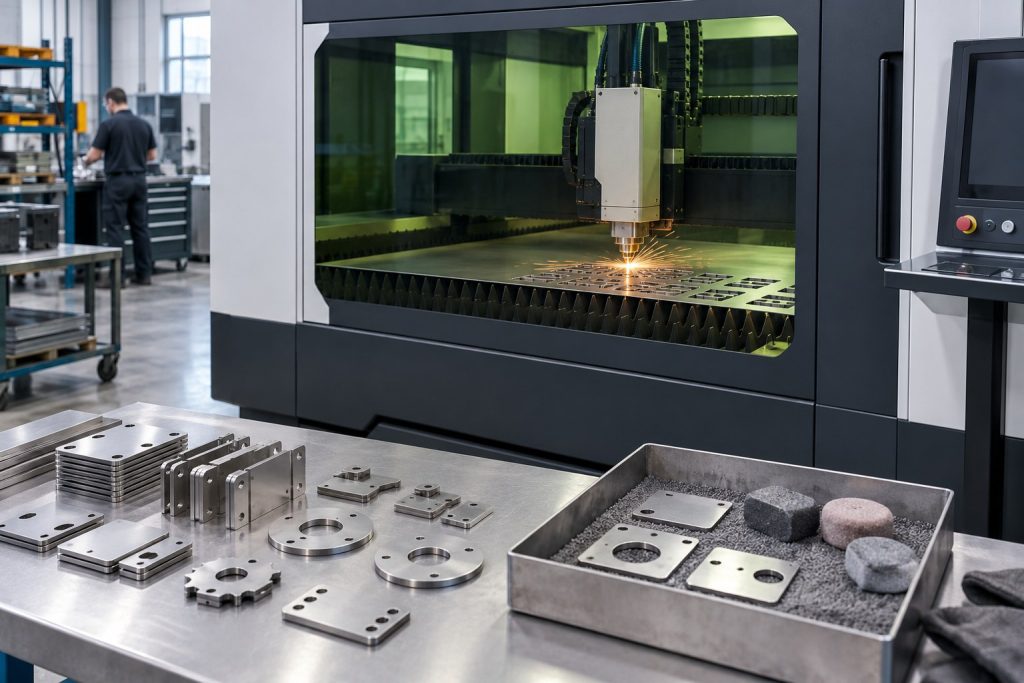
Stainless steel is prized for its corrosion resistance, attractive appearance and hygiene properties, but these same qualities make it difficult to finish after laser cutting. The material work-hardens under abrasive contact, meaning that aggressive grinding can actually make the edge harder and more brittle. The chromium oxide layer that protects the surface must be preserved or restored; if it is ground away unevenly, rust spots can appear later. And because stainless steel is often used in visible or sanitary applications—kitchen equipment, medical devices, architectural panels—any scratch, discoloration or uneven edge is unacceptable.
Why Manual Methods Fail on Stainless Steel
Hand grinding with flap wheels or Scotch-Brite pads is common in small workshops, but it presents three specific problems for stainless steel:
- Cross-contamination – If the same grinder was previously used on carbon steel, embedded iron particles will rust on the stainless surface, creating “free iron contamination.”
- Heat tinting – Excessive pressure generates heat that oxidizes the chromium layer, producing the yellow-brown “heat tint” that must be chemically passivated to restore corrosion resistance.
- Inconsistent grain – Hand sanding cannot maintain a uniform scratch direction. Under raking light, the surface looks patchy and unprofessional.
Machine Configuration for Stainless Steel
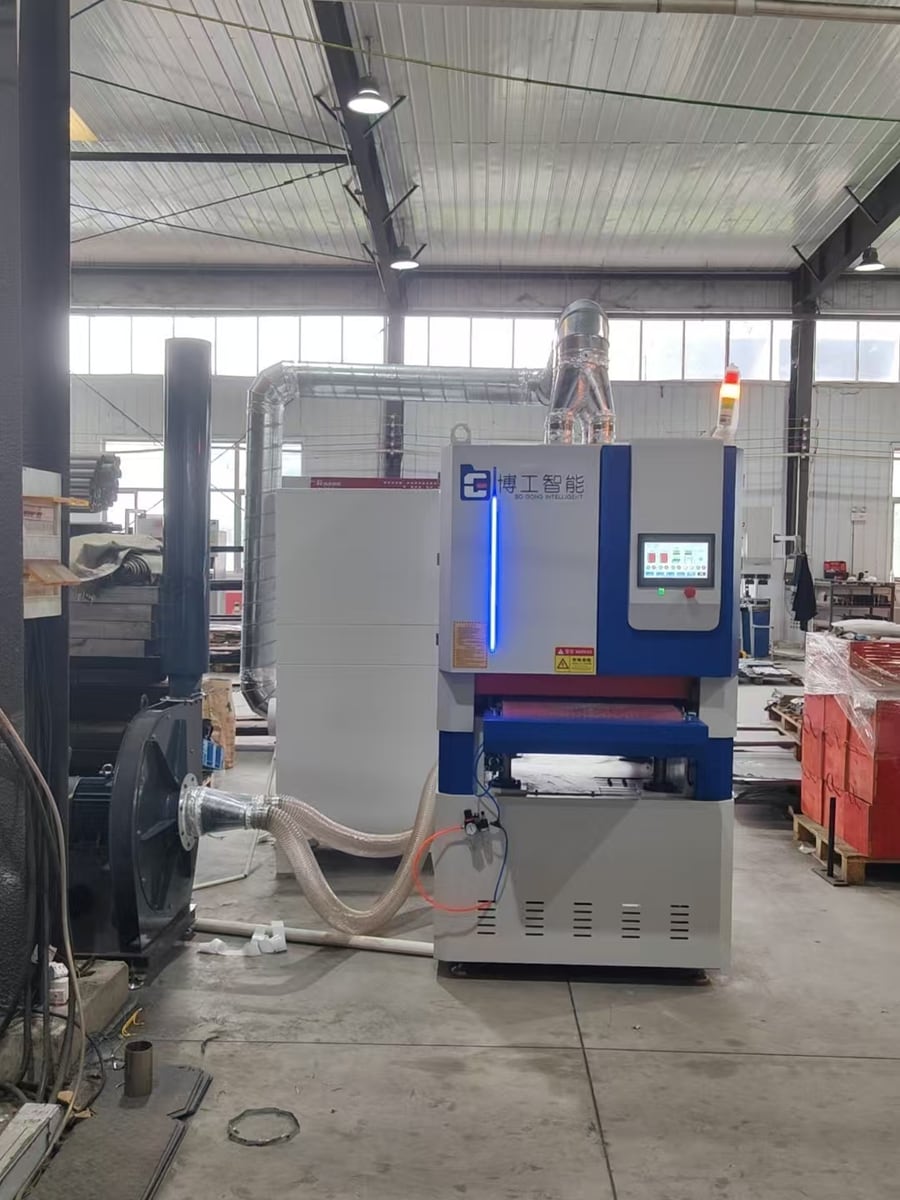
An automatic deburring machine designed for stainless steel uses different abrasive media and lower contact pressure than a carbon-steel machine. The key elements are:
1. Non-Woven Abrasive Brushes
Instead of rigid grinding wheels, non-woven (Scotch-Brite type) brushes flex to follow the part contour while producing a controlled satin finish. The open-web structure resists loading and runs cool, preventing heat tint. For #4 (satin) finishes, use medium-density non-woven rollers; for hairline finishes, add a flapper wheel with aligned abrasive strips.
2. Wet Operation Option
A wet sanding system floods the contact zone with water-based coolant. This virtually eliminates heat tint, captures metal dust before it becomes airborne and extends abrasive life by 40–60 %. Wet operation is strongly recommended for 304 and 316 grades where surface purity is critical.
3. Magnetic or Vacuum Conveyor
Thin stainless steel sheets (1–2 mm) are light and can be lifted by the rotation of the brushes. A vacuum hold-down conveyor or a magnetic bed (for ferritic grades) keeps the part flat and prevents it from being thrown back.
Process Parameters
Typical settings for austenitic stainless steel (304, 316):
- Conveyor speed: 3–8 m/min (slower for cosmetic finishes, faster for deburring only).
- Brush speed: 800–1200 RPM; higher speed gives a finer scratch pattern.
- Contact pressure: 0.5–1.5 bar pneumatic pressure on the brush head. Start low and increase only until burrs disappear.
- Abrasive grit sequence: P120 non-woven for deburring, followed by P180–P240 for satin finish.
Quality Verification
After deburring and finishing, verify three attributes:
- Edge radius – Use a radius gauge or optical comparator. Typical requirement is R0.5–R1.0 for general fabrications, R1.5 for food equipment.
- Surface roughness – Measure Ra with a portable profilometer. #4 finish is usually Ra 0.4–0.6 μm.
- Passivation – If heat tint or iron contamination is suspected, immerse parts in citric acid or nitric acid passivation bath per ASTM A967.
Cost Justification
A dedicated stainless steel finishing machine represents a capital investment, but the operating savings are substantial:
- Labor: one operator replaces four hand grinders.
- Rework: consistent machine settings reduce scrap from 5–8 % to under 1 %.
- Abrasive cost: non-woven rollers last 2–3 weeks versus daily replacement of hand pads.
- Delivery: throughput of 6–10 m/min allows just-in-time shipping instead of batch accumulation.
Conclusion
Stainless steel deserves a finishing process that preserves its corrosion resistance and appearance. Manual grinding is too risky for high-value applications. A properly configured automatic deburring machine with non-woven brushes, wet operation and vacuum hold-down delivers repeatable, audit-ready quality at a fraction of the labor cost. Send us your stainless steel sample and we will return a video of the finished edge and surface within 72 hours.
Need a machine recommendation?
Send your workpiece drawings, material type, burr condition and target surface finish. We will suggest the right sanding machine and give you an FOB price range.