Why Laser-Cut Parts Need Deburring
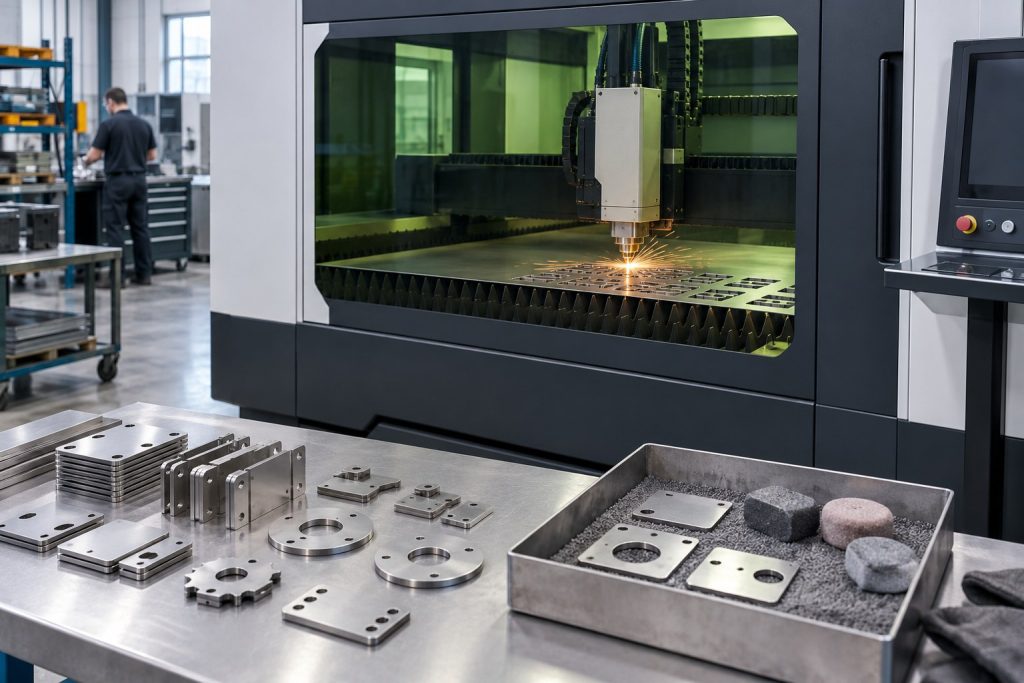
Laser cutting produces clean, precise profiles, but the thermal process always leaves microscopic burrs, slag droplets and oxide skin along the cut edge. On carbon steel, the heat of the laser beam melts the metal; as the beam moves forward, some molten material re-solidifies on the underside of the sheet, forming dross. On stainless steel, the oxide layer thickens and changes color, while aluminum can develop sharp, feather-like burrs that are easy to miss but dangerous to handle.
If these defects are not removed before welding, coating or assembly, they cause:
- Poor weld quality – Burrs prevent proper joint fit-up, leading to incomplete penetration and porosity.
- Coating failure – Paint or powder coat cannot adhere to loose oxide flakes; chips appear within weeks.
- Assembly injuries – Sharp edges cut operators during handling and installation.
- Tolerance issues – Thick slag deposits can exceed the allowed edge condition in engineering drawings.
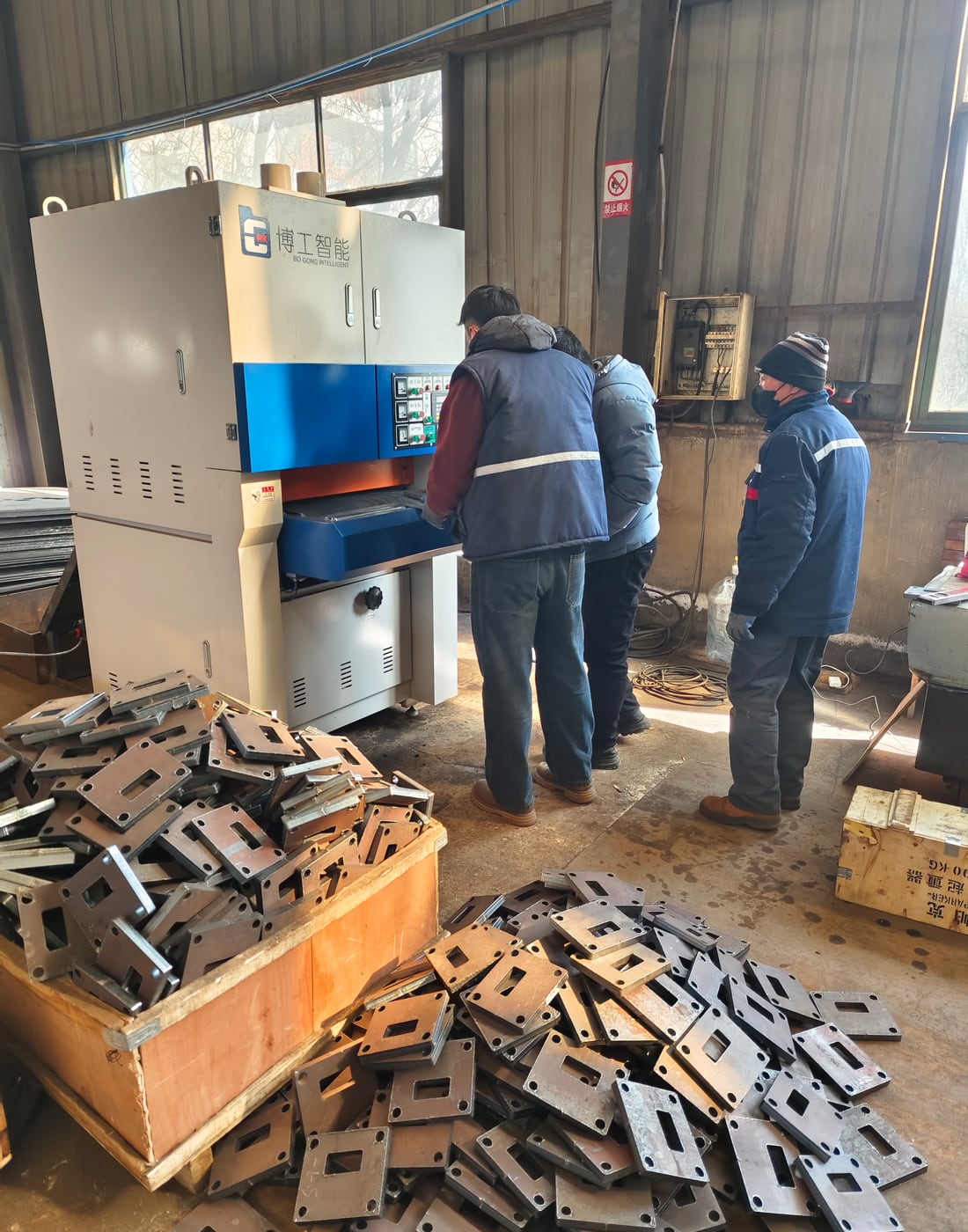
Common Deburring Methods Compared
1. Manual Grinding (Angle Grinder + Flap Disc)
The traditional approach uses handheld angle grinders with flap discs or wire brushes. It is flexible—any shape can be reached—but labor intensive. A skilled worker can deburr approximately 60–80 parts per hour for simple flat sheets, but throughput drops dramatically for complex profiles or tubes. Quality is highly operator-dependent; some edges are over-ground, others still carry burrs. Dust, noise and vibration also create occupational health risks.
2. Tumbling (Barrel or Vibratory Finishing)
Tumbling places parts in a rotating barrel or vibrating bowl together with ceramic media and compound. It is effective for small, robust parts such as brackets and fasteners. However, large sheet-metal panels do not fit in standard barrels, and thin parts can be bent by the weight of the media. Cycle times range from 30 minutes to 4 hours, making tumbling unsuitable for high-throughput production lines.
3. Automatic Sanding Machine (Belt + Brush)
An automatic sanding machine uses an abrasive belt to remove heavy slag, followed by rotary brushes to round sharp edges and clean the surface. Parts are fed through on a conveyor; the process takes 5–15 seconds per piece depending on thickness and material. Because the abrasive pressure and conveyor speed are fixed by machine settings, every part receives identical treatment. This is the preferred method for sheet-metal workshops processing 200+ parts per day.
How to Choose the Right Machine Configuration
When selecting a sanding machine for laser-cut parts, match the machine specification to your workpiece:
| Workpiece Feature | Recommended Configuration |
|---|---|
| 3–6 mm carbon steel, light burrs | BG-RR-630 with single brush head |
| 6–12 mm carbon steel, heavy slag | BG-RR-1300 with abrasive belt + brush |
| 1–3 mm stainless steel, cosmetic finish | BG-FM-1000 with planetary brush |
| Aluminum panels, no distortion | BG-RR-630 with soft-contact rollers |
Practical Tips for Best Results
- Run samples first – Always send cut samples to the machine supplier for testing. Video proof of results eliminates guesswork.
- Match abrasive grit to burr height – Heavy slag needs P36–P60 grit; light burrs can be handled with P80–P120.
- Keep conveyor speed consistent – Varying speed changes dwell time and affects edge radius. Lock the speed setting once qualified.
- Clean the machine daily – Metal dust accumulates under the conveyor and can scratch subsequent parts. A 10-minute cleaning routine at shift end pays for itself in reduced rework.
- Monitor brush wear – Worn brushes lose their cutting action and begin to polish rather than round edges. Replace brushes when edge radius falls below specification.
Conclusion
Removing burrs after laser cutting is not optional—it is a quality gate that determines weld strength, coating life and operator safety. For small workshops with low volume, manual grinding may still be economical. As soon as daily output exceeds 150–200 parts, an automatic sanding machine delivers consistent quality at a lower per-part cost. Contact us with your workpiece drawings and we will recommend the right machine, abrasive configuration and FOB price.
Need a machine recommendation?
Send your workpiece drawings, material type, burr condition and target surface finish. We will suggest the right sanding machine and give you an FOB price range.