Two Related but Different Processes
Buyers often use the terms “deburring” and “edge rounding” interchangeably, but in precision sheet-metal fabrication they describe distinct outcomes. Choosing the wrong process can lead to coating failures, weld gaps or assembly injuries. This article explains the technical difference, shows how to measure each result and helps you decide which machine—or combination—fits your production line.
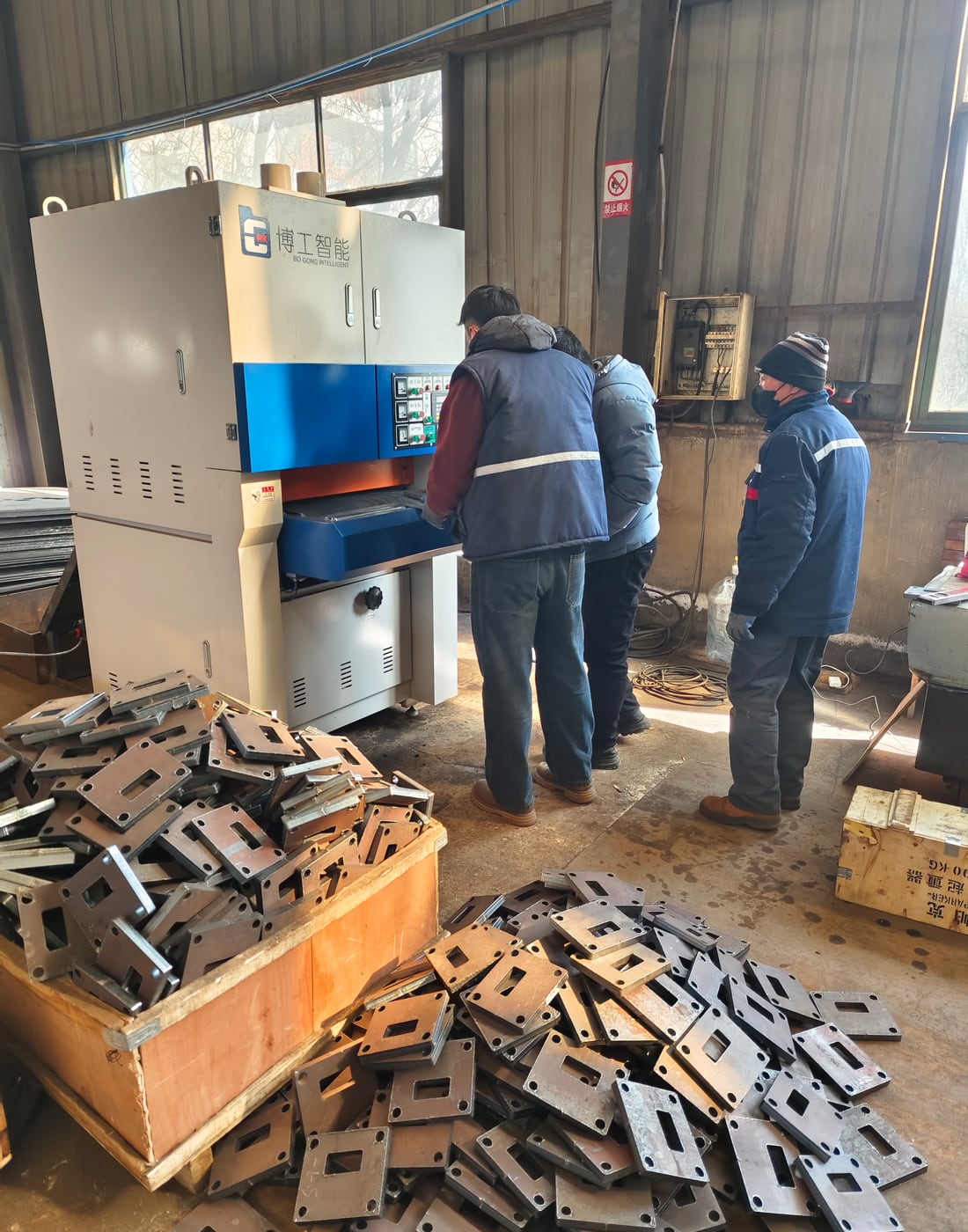
What Is Deburring?
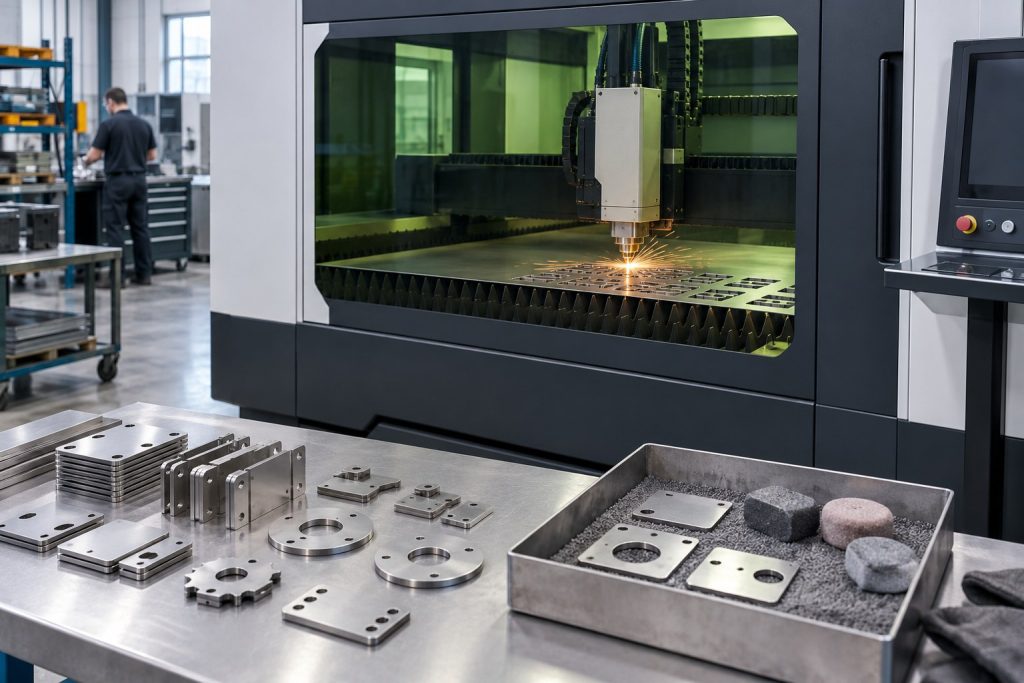
Deburring removes the loose, protruding material (burrs, slag, dross) that remains after cutting, punching or drilling. The goal is to create a clean, safe edge that will not cut handlers or interfere with assembly. Deburring does not necessarily change the macro-geometry of the edge; a sharp 90-degree corner can remain sharp as long as the loose material is gone.
Common deburring methods include:
- Abrasive belt sanding
- Wire brush scrubbing
- Tumbling with ceramic media
- Thermal or cryogenic deburring for small precision parts
What Is Edge Rounding?
Edge rounding intentionally changes the edge geometry from a sharp 90-degree corner to a smooth, radiused profile (typically R0.5 mm to R2 mm). The purpose is not only safety but also functional performance: rounded edges improve paint adhesion, reduce stress concentrations and allow proper gasket seating.
Edge rounding is usually achieved with:
- Rotary brush heads with radiused bristle tips
- Planetary brush systems that attack the edge from multiple angles
- Specialized edge-rounding cutters on CNC machining centers
Visual and Dimensional Comparison
| Attribute | After Deburring Only | After Edge Rounding |
|---|---|---|
| Edge angle | Still ~90°, but clean | Smooth radius R0.5–R2 |
| Touch safety | Reduced cut hazard | Fully safe to touch |
| Paint adhesion | Moderate; sharp corner may chip | Excellent; coating flows around radius |
| Weld preparation | Adequate for butt joints | Better for fillet welds; reduces undercut |
| Measurement | Visual / tactile inspection | Radius gauge or optical comparator |
When You Need Only Deburring
Deburring alone is sufficient when:
- The part is hidden inside an assembly (internal brackets, chassis rails).
- It will be welded immediately; the weld bead will cover the edge anyway.
- The drawing specifies “remove burrs” without an edge-radius callout.
- Budget is tight and cycle time must be minimized.
A simple abrasive belt machine or single-brush deburring unit handles this task economically.
When You Need Edge Rounding
Edge rounding is mandatory when:
- The part is handled by end users (furniture, appliances, enclosures).
- A cosmetic coating (powder coat, wet paint, anodize) is applied; sharp edges cause thinning and chips.
- The drawing specifies an edge radius per ISO 13715 or company standard.
- The part must pass a tactile safety audit (no sharp edges allowed).
The Combined Solution: Deburr + Round in One Pass
Modern multi-head sanding machines perform both operations in a single pass. The first station uses an abrasive belt to deburr and remove heavy slag. The second station uses rotary brushes to round the edge. The third station, if present, polishes or cleans the surface.
Benefits of combining both processes:
- One operator, one machine, one setup.
- Consistent edge radius because the brush always works on a pre-deburred edge.
- Shorter total cycle time compared to two separate machines.
- Smaller floor footprint in the workshop.
How to Specify Edge Radius
If your drawing calls for edge rounding, specify it clearly:
- R1 max – Any radius up to 1 mm is acceptable; no minimum.
- R1 ± 0.3 – Target 1 mm, tolerance band 0.7–1.3 mm.
- All edges R0.5 unless noted – General note for the entire part.
Remember that edge radius is directional. A brush-based machine produces a radius along the through-thickness direction (the “edge”), but the top and bottom faces remain flat unless surface finishing is also specified.
Conclusion
Deburring removes loose material; edge rounding changes geometry. Many parts need both. If you are unsure which your product requires, send us a drawing and a sample. We will test it on our multi-head machine and return a video showing the edge before deburring, after deburring and after rounding, with radius measurements for your quality records.
Need a machine recommendation?
Send your workpiece drawings, material type, burr condition and target surface finish. We will suggest the right sanding machine and give you an FOB price range.