Why Dust Collection Is Non-Negotiable
Metal sanding and deburring generate large quantities of fine particulate: iron oxide from carbon steel, hexavalent chromium from stainless steel, aluminum dust and abrasive grit fragments. Without effective extraction, this dust settles on machinery, contaminates finished parts, creates slip hazards on floors and—most seriously—poses respiratory and explosion risks to workers. Regulatory limits in most countries now require airborne metal dust to stay below 0.1 mg/m³ for respirable fractions.
Types of Dust Generated
| Material | Dust Characteristics | Special Risk |
|---|---|---|
| Carbon steel | Magnetic, heavy, sharp edges | Siderosis (lung iron deposits) |
| Stainless steel | Contains nickel and chromium | Metal fume fever; Cr(VI) carcinogen |
| Aluminum | Light, explosive when airborne | Combustible dust explosion (Kst > 200) |
| Abrasive belts | Ceramic or aluminum oxide grit | Silicosis if silica-based |
Dust Collector Design for Sanding Machines
A well-designed dust collection system for a metal sanding machine has four stages:
1. Hood and Ducting at Source
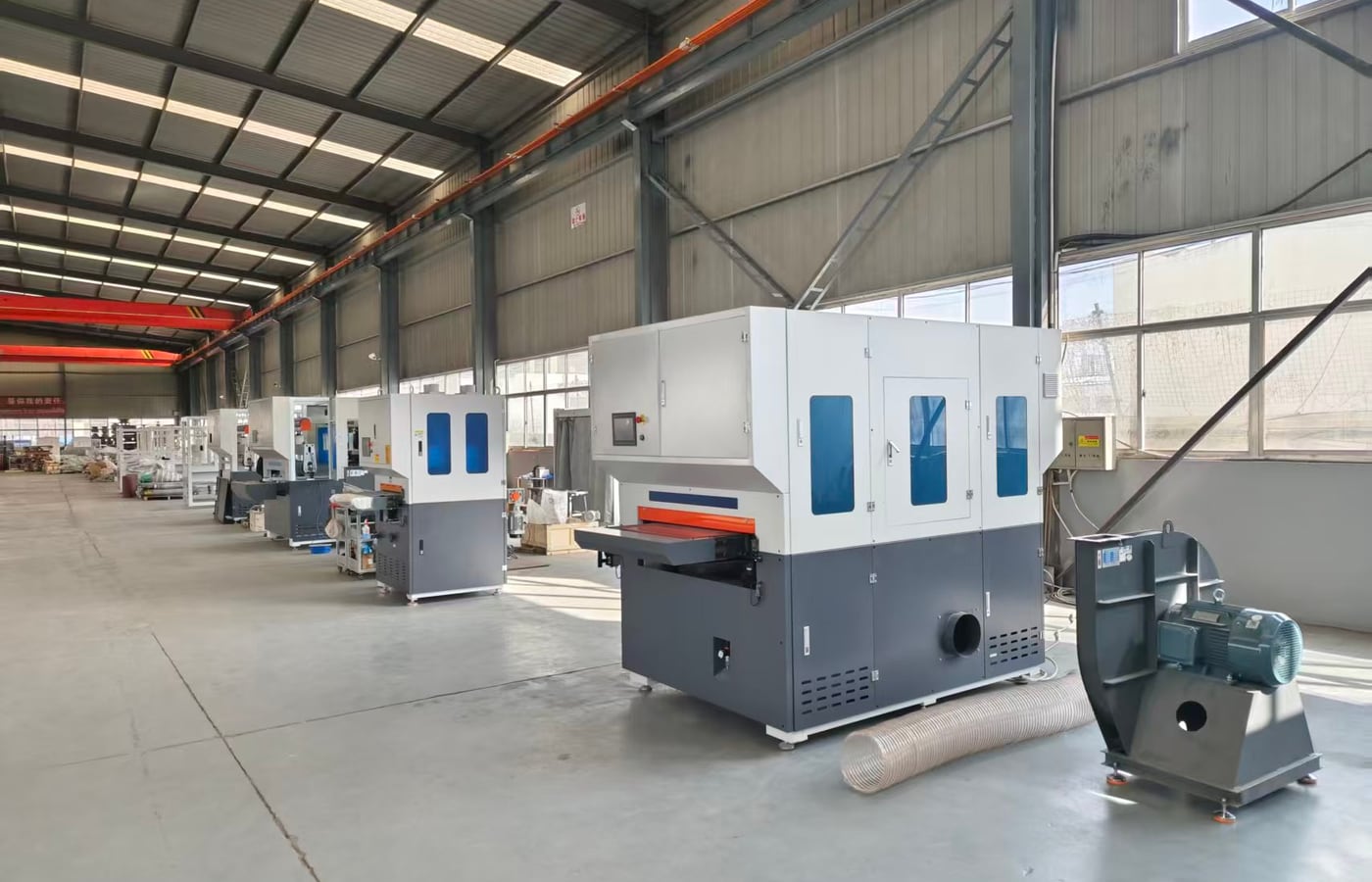
The dust should be captured as close to generation as possible. Bogong sanding machines include enclosed hoods over each abrasive head with 150–200 mm diameter extraction ports. The hood shape follows the contour of the brush or belt to minimize escape velocity. Ducting should be smooth-radius bends; sharp 90-degree elbows create turbulence and pressure loss.
2. Cyclone Pre-Separator
Heavy particles and long metal chips are removed in a cyclone before they reach the filter. This extends filter life and prevents sparks from reaching the baghouse. For aluminum applications, the cyclone should be grounded to prevent static discharge.
3. Cartridge or Bag Filter
The remaining fine dust is captured in a filter medium. Cartridge filters with nanofiber coating achieve 99.9 % efficiency at 0.5 μm. Pleated cartridges offer more surface area than bags, reducing pressure drop and allowing a smaller footprint. Choose filters rated for metal dust (conductive grounding strips) and specify M-class (medium hazard) or H-class (high hazard) per EN 60335-2-69.
4. Fan and Discharge
The extraction fan must overcome the total system pressure drop (typically 1500–2500 Pa). For indoor recirculation in cold climates, add a HEPA after-filter to return cleaned air to the workshop. For outdoor discharge, ensure the stack height meets local environmental regulations.
Sizing the Dust Collector
Air volume requirement depends on the number of extraction ports and the width of the machine:
- 630 mm single-head machine: 2000–2500 m³/h at 1500 Pa
- 1000 mm two-head machine: 4000–5000 m³/h at 1800 Pa
- 1300 mm three-head machine: 6000–8000 m³/h at 2000 Pa
If multiple machines connect to one central collector, size the fan for simultaneous operation or install blast gates to isolate idle machines.
Wet vs Dry Extraction
Dry extraction is standard for carbon and stainless steel. It is simple, low maintenance and allows metal dust to be recycled. Wet extraction (venturi scrubber or wet downdraft table) is recommended for aluminum and magnesium because water suppresses the dust cloud and prevents combustion. Wet systems require wastewater treatment and sludge removal, adding operational complexity.
Maintenance Checklist
- Daily: Empty the cyclone drum; check ducting for blockages.
- Weekly: Inspect filter differential pressure; clean or pulse-jet blow filters if ΔP exceeds 1500 Pa.
- Monthly: Check fan belt tension; verify grounding continuity on aluminum systems.
- Quarterly: Replace filters if efficiency drops; inspect ductwork for corrosion or leaks.
Conclusion
Dust collection is not an afterthought; it is an integral part of safe and compliant metal sanding. The right system protects workers, preserves part quality, reduces housekeeping and keeps your factory on the right side of occupational health inspectors. Bogong machines are designed with integrated extraction ports and can be bundled with a matched dust collector sized for your material and throughput. Ask for a ventilation layout drawing when you request a quotation.
Need a machine recommendation?
Send your workpiece drawings, material type, burr condition and target surface finish. We will suggest the right sanding machine and give you an FOB price range.