Working Width Defines Machine Capacity
The working width of a sanding machine is the maximum dimension that can pass through the abrasive heads perpendicular to the direction of travel. It is the single most important parameter when matching a machine to your product line. Choose too narrow and your largest parts will not fit; choose too wide and you pay for unused capacity, larger floor space and higher power consumption. This guide explains how to calculate the ideal width for your current and future production.
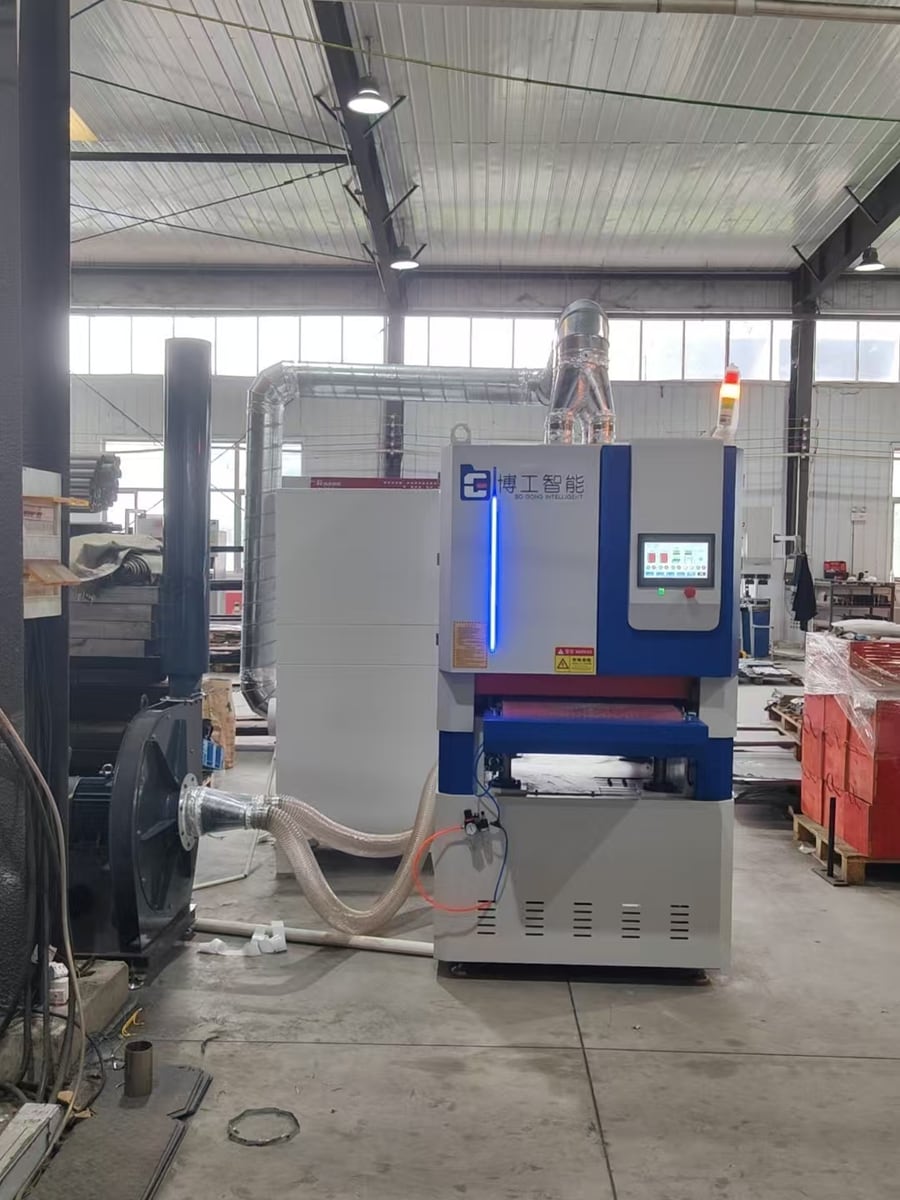
How to Measure Your Required Width
Do not simply look at your largest part dimension. You must account for how the part is fed:
- Part width – The dimension perpendicular to conveyor travel.
- Side clearance – Allow 20–30 mm on each side so the part does not scrape the machine frame or side guards.
- Multi-up feeding – If you place two or more small parts side-by-side, add their widths plus gaps.
- Future growth – If you plan to quote larger panels next year, include that size now to avoid buying twice.
Formula: Required machine width = Part width + 2 × side clearance + future margin
630 mm Working Width
The 630 mm model is the entry-level machine, ideal for small workshops and specialized applications.
Best For
- Parts up to 550–600 mm wide (after side clearance).
- Small brackets, enclosures, electrical panels and furniture components.
- Aluminum and thin stainless steel where light contact pressure is required.
- Workshops with limited floor space (footprint ~1.8 m × 1.2 m).
Typical Throughput
- Conveyor speed: 2–12 m/min
- Power: 4–7.5 kW total
- Single-operator production: 1,500–2,500 parts/day
Limitations
- Cannot handle standard 1250 mm sheet-metal panels in one pass.
- Two-up feeding is limited to parts under 280 mm wide each.
- Heavier abrasive heads (for thick slag removal) are not typically offered at this width.
1000 mm Working Width
The 1000 mm model is the most versatile size, popular with medium-sized fabricators and export-oriented OEMs.
Best For
- Parts up to 900–950 mm wide.
- Standard half-sheet panels (1000 × 2000 mm) fed lengthwise.
- Kitchen equipment, elevator panels and appliance housings.
- Two-up feeding of 400–450 mm parts.
Typical Throughput
- Conveyor speed: 2–15 m/min
- Power: 7.5–15 kW total
- Single-operator production: 2,500–4,000 parts/day
Advantages
- Fits the sweet spot between cost and capacity.
- Available with two or three processing heads (deburr + round + brush).
- Wide enough for most sheet-metal products without paying for 1300 mm capacity you rarely use.
1300 mm Working Width
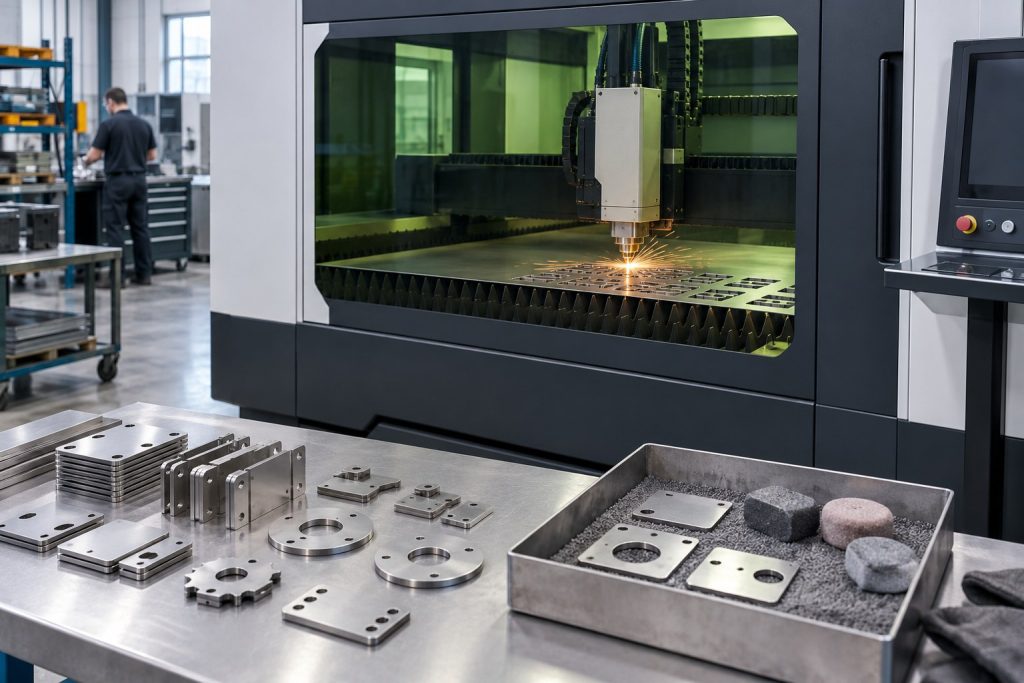
The 1300 mm model is the heavy-duty choice for high-volume laser cutting shops and steel service centers.
Best For
- Parts up to 1200–1250 mm wide.
- Full-sheet panels (1250 × 2500 mm) fed widthwise or lengthwise.
- Heavy carbon steel with thick slag and oxide skin.
- Two-up feeding of 600 mm parts or three-up of 400 mm parts.
Typical Throughput
- Conveyor speed: 2–20 m/min
- Power: 11–22 kW total
- Single-operator production: 4,000–6,000 parts/day
Advantages
- Highest productivity per operator.
- Accommodates future product growth without machine replacement.
- Heavy-duty frame and drive train designed for continuous three-shift operation.
Quick Selection Guide
| Your Situation | Recommended Width |
|---|---|
| Small workshop, parts < 500 mm | 630 mm |
| General fabricator, mixed sizes | 1000 mm |
| High-volume laser cutting plant | 1300 mm |
| Need to run two parts side-by-side | Width = 2 × part width + 100 mm |
| Budget under USD 20,000 | 630 mm |
| Budget USD 25,000–35,000 | 1000 mm |
Other Dimensions to Consider
Working width is not the only size constraint. Check these as well:
- Conveyor length – Longer infeed and outfeed tables support heavier parts and allow stacking.
- Machine height – Ensure your workshop ceiling height allows installation and maintenance access.
- Door width – Some 1300 mm machines are shipped in two sections because they do not fit through standard factory doors.
- Weight – A 1300 mm machine can weigh 2,500–3,500 kg; verify your floor load capacity.
Conclusion
Selecting the right working width is a balance between current part size, future growth, floor space and budget. When in doubt, send us your largest part drawing and daily volume. We will model the throughput for each width and recommend the machine that delivers the lowest cost per finished part.
Need a machine recommendation?
Send your workpiece drawings, material type, burr condition and target surface finish. We will suggest the right sanding machine and give you an FOB price range.