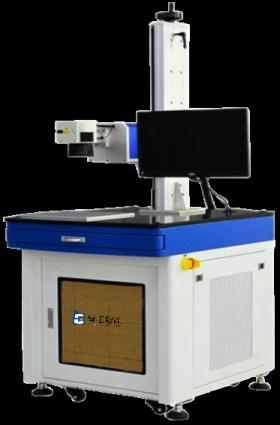
Robotic Grinding and Deburring Center
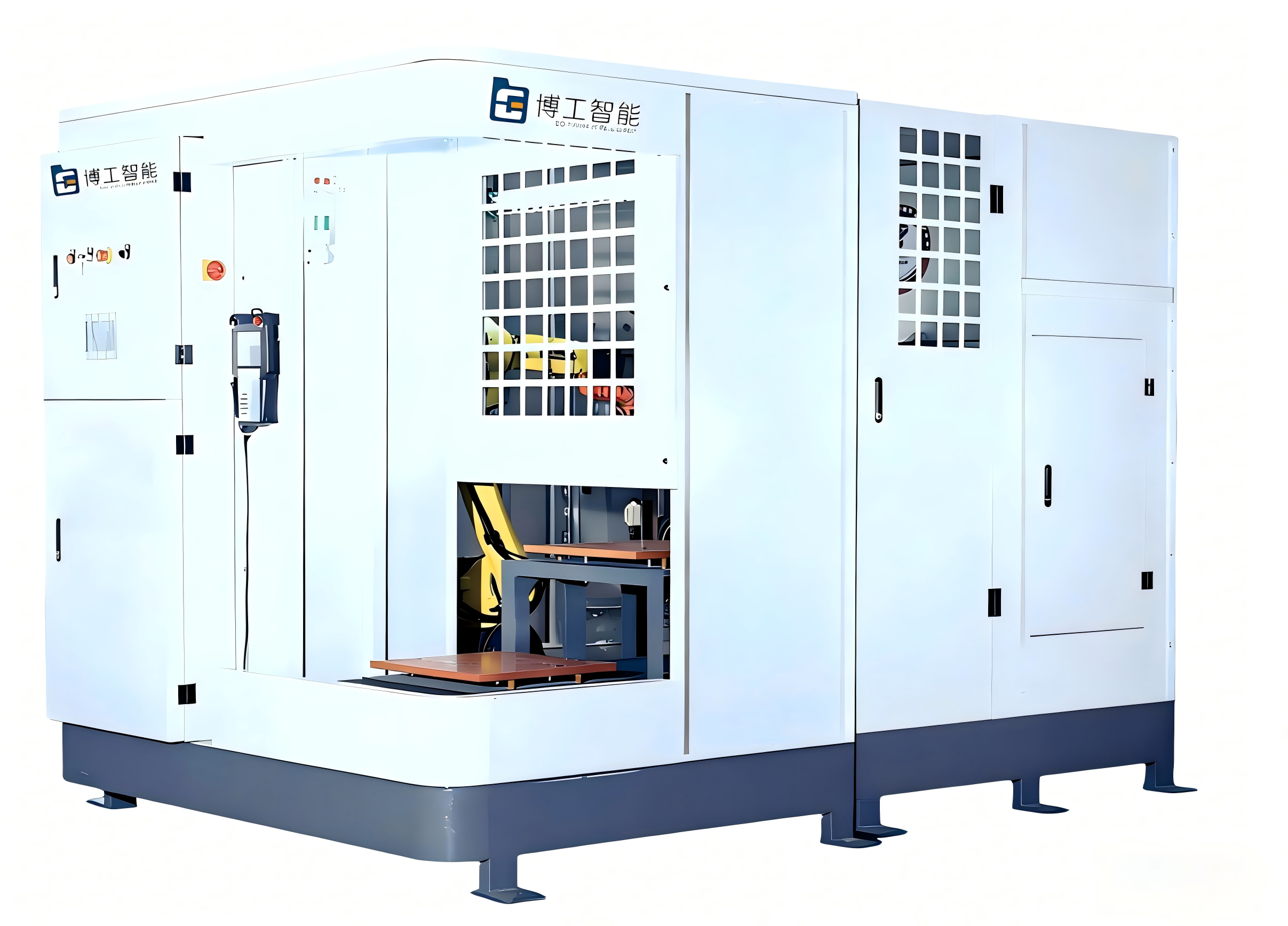
The BOGONG robotic grinding and deburring center combines industrial robot motion control, sanding tools, vision modules and fixture systems to finish welded parts, cast parts and sheet metal assemblies. It is designed for factories that need flexible automation instead of heavy manual grinding.
Application Scenarios
- Weld seam grinding on frames, cabinets and sheet metal assemblies
- Deburring of formed parts and irregular workpieces
- Robotic sanding for medium-batch and high-mix production
- Automated finishing with 2D defect detection or 3D vision guidance
System Modules
- Industrial robot with grinding path programming
- Abrasive belt grinding module and interchangeable tools
- 3D vision module for workpiece positioning
- 2D defect inspection module for surface quality checking
- Fixture table, safety enclosure and dust extraction interface
Reference Parameters
| Robot payload | Selected according to workpiece and tool weight |
|---|---|
| Process | Grinding, sanding, deburring, weld seam finishing |
| Vision | 2D inspection and 3D positioning optional |
| Tooling | Abrasive belt module, floating grinder, customized end tools |
| Safety | Enclosure, interlock, dust collection interface |
When Robotic Grinding Makes Commercial Sense
Robotic grinding is most valuable when the factory has repeated part families, high manual grinding cost, unstable surface quality or a difficult working environment. It is not only a robot purchase; it is a process engineering project that includes fixtures, tools, dust control, safety and cycle time verification.
Feasibility Factors
| Part repeatability | Robotic grinding works best when part families repeat and can be located reliably by fixtures or vision. |
|---|---|
| Grinding area | Open weld seams, edges and reachable surfaces are easier to automate than hidden corners. |
| Surface target | Define whether the goal is weld flattening, burr removal, cosmetic finishing or coating preparation. |
| Tool compliance | Floating tools and force control help compensate for small part variations. |
| Dust and safety | A safety enclosure and dust extraction design should be included from the beginning. |
Typical Workpieces
- Welded metal frames and support structures
- Cabinet bodies, enclosures and sheet metal assemblies
- Cast or formed parts requiring edge finishing
- Medium-batch products with repeated grinding paths
- Parts where manual grinding quality varies between operators
Project Workflow
- Review drawings, sample photos and current manual grinding process.
- Define finish standard, cycle time target and inspection method.
- Design fixture, robot reach, tool package and dust collection layout.
- Test sample parts and adjust abrasive tools or path strategy.
- Deliver robotic cell with safety enclosure, training and process documentation.
RFQ Checklist
Please send 3D drawings or 2D drawings, workpiece dimensions and weight, material, weld photos, target finish photos, current manual grinding time, annual production volume, allowed cycle time, loading method and factory layout. A short video of the current manual process is very useful for evaluation.
Core Selling Points
A BOGONG robotic grinding and deburring center automates sanding, weld seam grinding and edge finishing for repeated metal parts. It can include an industrial robot, abrasive belt module, floating tools, 3D vision, 2D inspection, fixtures, safety enclosure and dust extraction. It is suitable when manual grinding is costly, inconsistent or difficult to scale.
Buying FAQ
Is robotic grinding suitable for small batches?
It can be suitable when the workpieces repeat by family and manual grinding cost or quality variation is high. Fixtures and programs can be designed for product families.
Can the system handle irregular parts?
Yes. Vision, floating tools and customized fixtures can help process irregular welded or formed parts.
What should we send for evaluation?
Send part drawings, photos, material, weld condition, required finish, cycle time target and current manual process video if available.
Can robotic grinding completely replace manual grinding?
For repeated part families, it can replace a large portion of manual grinding. Some final touch-up may still be needed for complex corners or highly cosmetic surfaces.
Is vision always necessary?
No. If fixtures locate the workpiece accurately, vision may not be required. Vision becomes valuable when part position variation affects the grinding path.