Case Study: Robotic Grinding Cell for Welded Metal Frames
A welded frame manufacturer wanted to reduce manual grinding on repeated frame products. Workers had to remove weld marks and surface defects before coating, but the process was physically demanding and inconsistent.
Customer Challenge
- Weld seam grinding depended heavily on experienced workers
- Different operators produced different surface results
- Grinding dust and noise affected the workshop environment
- Production needed a repeatable process for medium-batch frame parts
BOGONG Solution
BOGONG designed a robotic grinding and deburring center with abrasive belt tooling, fixtures and dust collection interface. For parts with position variation, 3D vision guidance was considered to improve path reliability.
Result
- Manual grinding workload was reduced
- Weld seam finishing became more repeatable
- Operators could focus on loading, inspection and process control
- The system created a scalable model for similar frame products
Recommended Products
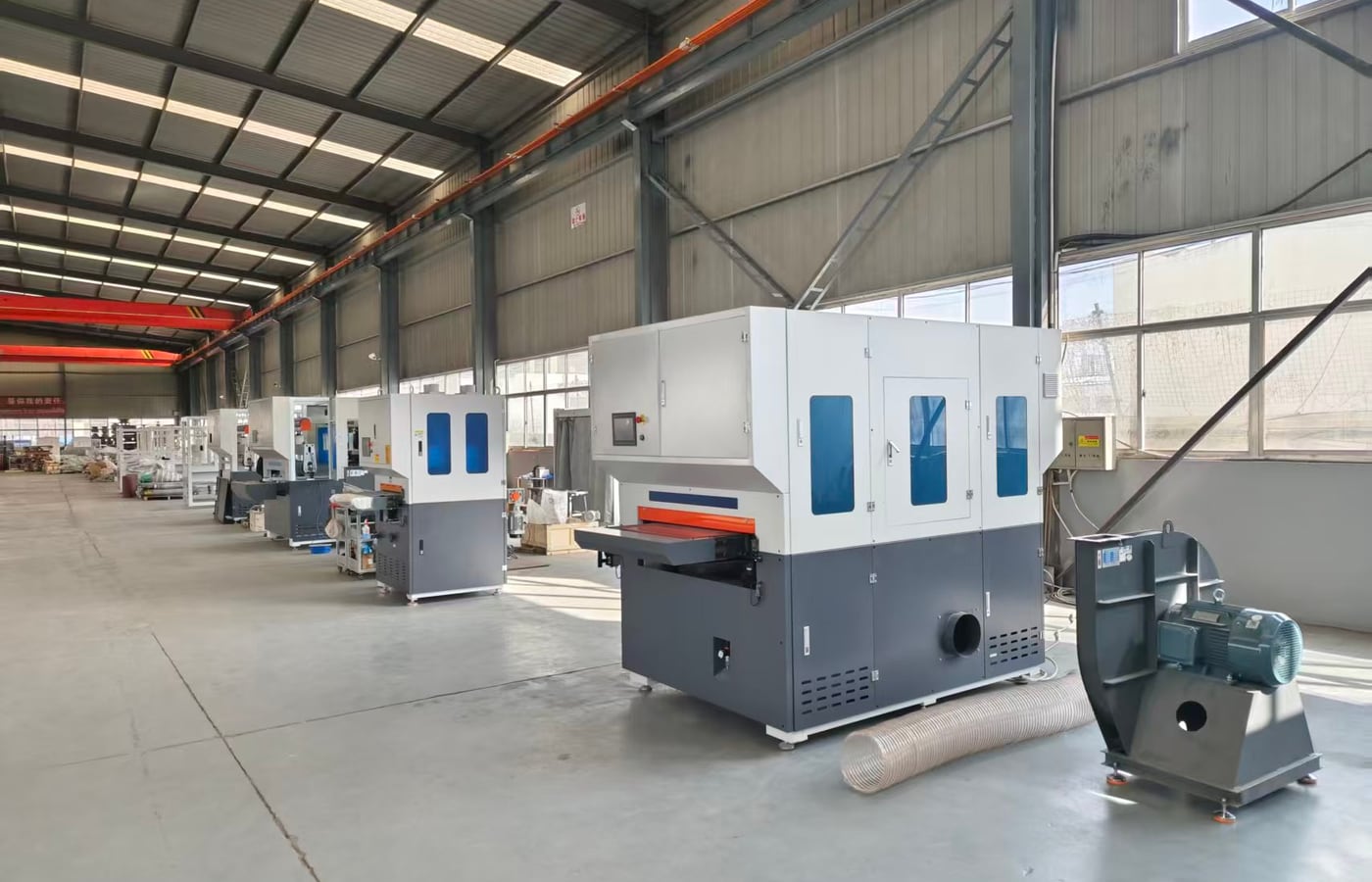
Robotic grinding and deburring center, industrial dust collector, wide belt metal sanding machine.
Buyer Takeaways
- Robotic grinding is most suitable when parts repeat by family and can be fixed or positioned reliably.
- Cycle time, finish standard and current manual grinding time should be measured before project evaluation.
- Dust extraction and safety enclosure should be included in the project scope from the beginning.
Need a machine recommendation?
Send your workpiece drawings, material type, burr condition and target surface finish. We will suggest the right sanding machine and give you an FOB price range.